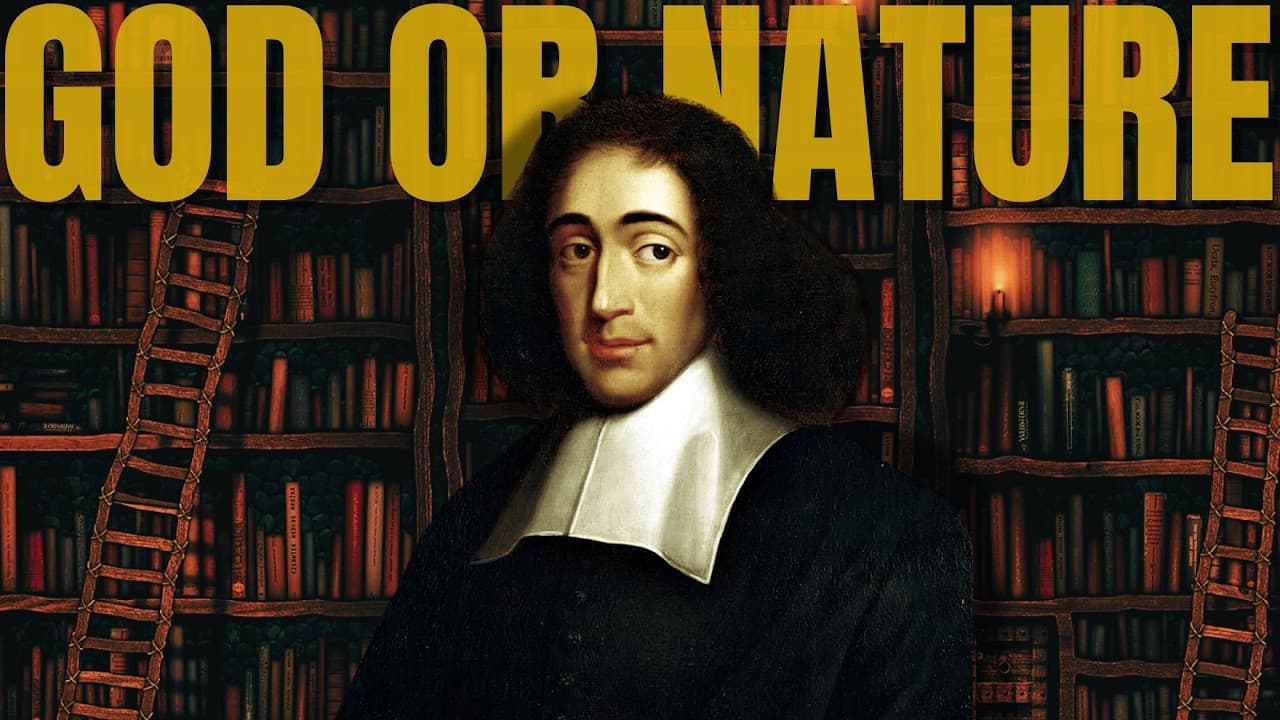
God or Nature
Spinoza's Complete Philosophy
Chapters
- 00:00:00Chapter 1: God or Nature: The Most Dangerous Idea
- 00:10:47Chapter 2: Amsterdam and the Portuguese Jewish World
- 00:24:44Chapter 3: Education, Doubt, and the Path to Excommunication
- 00:41:18Chapter 4: The Cherem: Cursed and Cut Off
- 00:52:10Chapter 5: The Lens Grinder and the Philosophical Life
- 01:08:56Chapter 6: The Geometric Method: Why Demonstrate Ethics Like Mathematics
- 01:20:51Chapter 7: One Substance: The Foundation of Everything
- 01:34:28Chapter 8: God as Nature: Infinite Attributes and Eternal Necessity
- 01:50:32Chapter 9: Farewell to Miracles, Providence, and Final Causes
- 02:05:49Chapter 10: Mind and Body: Parallelism and the Rejection of Dualism
- 02:20:07Chapter 11: Three Kinds of Knowledge: Imagination, Reason, Intuition
- 02:34:38Chapter 12: Conatus: The Striving at the Heart of All Things
- 02:46:56Chapter 13: Joy, Sadness, and the Architecture of the Emotions
Full Transcript
Chapter 01: God or Nature: The Radical Vision
Deus sive Natura. God or Nature. Three Latin words that would shake European thought to its foundations and make their author the most dangerous philosopher of the seventeenth century. When Baruch Spinoza penned this equation in his masterwork, the Ethics, he was not merely proposing a philosophical theory. He was collapsing a distinction that had structured Western civilization for more than a thousand years, the separation between the divine and the natural, between the sacred realm of God and the secular world of material things. In those three words, transcendence became immanence. The supernatural became the natural. The creator became identical with creation itself.
To understand why this was so radical, we must appreciate what it meant to say God in the world Spinoza inhabited. For Jews and Christians alike, God was the transcendent creator, wholly other than his creation, existing beyond nature in eternal perfection. God created the world through an act of will, governed it through providence, performed miracles that suspended natural law, and judged humanity according to his purposes. Nature, by contrast, was the created order, dependent, contingent, existing only because God sustained it moment by moment through his power. Between God and nature stood an infinite qualitative difference, an unbridgeable metaphysical gap.
Spinoza closed that gap. He did not deny God. Indeed, he spoke of God constantly, with what some called intoxication, with what others denounced as blasphemy. But the God he described bore little resemblance to the God of Abraham, Isaac, and Jacob, or to the God of Christian theology. Spinoza's God did not stand outside nature as its creator. Spinoza's God did not will, plan, or judge. Spinoza's God performed no miracles and answered no prayers. Spinoza's God was not a person at all, not a being who loved or commanded or punished. Spinoza's God was nature itself in its infinite totality, not a who but a what, not a creator but the singular substance of which all things are expressions.
This was not atheism in the straightforward sense of denying divine existence. Spinoza affirmed the reality of God with a rigor and consistency that few theologians could match. But he transformed what the word God meant. He naturalized divinity and divinized nature. He made the infinite and the eternal present in every finite thing. He found necessity, not caprice, at the heart of existence. He replaced a God of will with a God of reason, a God of purpose with a God of causal law, a God who intervenes with a God who simply is.
The consequences were immediate and profound. If God is nature, then everything that exists follows necessarily from the divine nature, just as geometric truths follow from axioms. There is no contingency, no arbitrary creation, no space for miracles. If God is nature, then studying nature is studying God, and science becomes a form of theology, a mapping of the divine attributes. If God is nature, then the traditional religious practices, prayer, sacrifice, supplication, the performance of rituals meant to change God's mind or win his favor, become meaningless. God's mind cannot change because God has no mind in the personal sense.
Spinoza knew what he was doing. He knew that his philosophy would be condemned as atheism, as the destruction of religion, as a danger to morality and social order. And indeed, within his lifetime and for more than a century after his death, Spinozism became synonymous with atheism in European discourse. His books were banned, burned, and placed on the Index of Prohibited Books. His name became a byword for impiety.
Yet Spinoza was not trying to destroy religion. He was trying to purify it, to strip away the superstition, the anthropomorphism, the projection of human passions onto the divine. He sought a religion of reason, a way of loving God that did not depend on hope for reward or fear of punishment. He wanted people to see God truly, as the infinite eternal substance whose nature is expressed in every law of physics, every mathematical truth, every causal connection in the universe. And he believed that such knowledge would produce its own form of love, not the passionate, needy love of a creature for a distant lord, but what he called the intellectual love of God, an active joy arising from the contemplation of necessity itself.
Chapter 02: Amsterdam, the Portuguese Jewish Community, and Early Life
Baruch Spinoza was born on November 24, 1632, in Amsterdam, into a family of Portuguese Jews who had fled the Iberian Peninsula to escape the terror of the Inquisition. His family belonged to the community of former conversos, Jews who had been forced to convert to Christianity under threat of death, who had lived as Christians outwardly while maintaining Jewish practices in secret, and who had finally escaped to the relative safety of the Dutch Republic. This was a community marked by a profound sense of deliverance and an equally profound anxiety about preservation.
Amsterdam in the seventeenth century was unlike any other city in Europe. The Dutch Republic had won its independence from Catholic Spain through decades of bitter warfare, and it had emerged as a beacon of religious tolerance by the standards of the age. Amsterdam became a refuge for persecuted minorities, a center of international trade, and a hub of intellectual ferment.
The education Baruch received was typical for a boy of his community and class. He attended the Talmud Torah school associated with the Portuguese synagogue, where he studied Hebrew, the Torah, the Prophets, and the Writings of the Hebrew Bible. He learned the commentaries of medieval Jewish scholars, especially Maimonides and Ibn Ezra, who would later influence his approach to biblical interpretation.
But something set Baruch apart from his peers. Even as a young man, he seems to have possessed an unusual independence of mind, a willingness to question received wisdom, and an attraction to ideas that lay outside the bounds of traditional Jewish learning. We know that by his early twenties, Spinoza had gone beyond the curriculum of the Talmud Torah and was studying Latin, the language of European learning. His teacher was Franciscus van den Enden, a former Jesuit who ran a Latin school in Amsterdam and who held decidedly radical views. In Van den Enden's school, Spinoza encountered the new philosophy of Descartes, which was revolutionizing European thought.
Chapter 03: The Cherem: Excommunication and Its Aftermath
On July 27, 1656, the governing board of the Portuguese-Jewish community in Amsterdam issued a writ of cherem against Baruch Spinoza. This was the most severe form of excommunication available in Jewish law, a total ban cutting the offender off from all contact with the community. The curses pile up with a rhetorical intensity that suggests the community's fury and fear: "Cursed be he by day and cursed be he by night; cursed be he when he lies down and cursed be he when he rises up."
How did Spinoza react to the cherem? By all accounts, with remarkable equanimity. He changed his name from the Hebrew Baruch to the Latin Benedictus, both names meaning blessed. This was a declaration of independence, a signal that he was leaving the Jewish world behind and entering the broader realm of European philosophy, where Latin was the language of scholarly discourse. He did not convert to Christianity. He positioned himself as a cosmopolitan thinker, not bound to any particular religious community.
Chapter 04: The Lens Grinder and the Life of Philosophy
After his expulsion from the Jewish community, Spinoza crafted a life that embodied the philosophical ideals he would later articulate in the Ethics. He lived modestly, worked with his hands, maintained independence from the patronage systems that controlled most intellectual life in the seventeenth century, and dedicated himself to the pursuit of truth through reason.
Spinoza's occupation as a lens grinder was both practical necessity and philosophical choice. The skill required real expertise, grinding lenses to precise curvatures demanded knowledge of optics, geometry, and the properties of glass. The work was also dangerous, though this danger was not fully understood at the time. Grinding glass produces a fine dust that, when inhaled over years, damages the lungs.
The most famous refusal of his career came in 1673, when Spinoza was offered a position as professor of philosophy at the University of Heidelberg. Spinoza declined politely but firmly. He explained that he valued his independence too highly to submit to the constraints of an academic post.
On February 21, 1677, Spinoza died at the age of forty-four. Later that year, his friends published the Opera Posthuma, a collection containing the Ethics, the unfinished Political Treatise, and his correspondence. The ideas in those works would not die. They would circulate underground, influencing thinkers who could not acknowledge their debt, shaping debates about God, nature, freedom, and politics for generations to come.
Chapter 05: The Geometric Method and the Ethics
The Ethics is written more geometrico, in the geometric manner, using the same formal structure that Euclid employed in the Elements. Spinoza chose the geometric method because he believed that philosophical truth has the same character as mathematical truth: it is necessary, demonstrable, and certain. Just as the properties of triangles follow necessarily from the definition of a triangle, so too do the truths about God, mind, and human freedom follow necessarily from the fundamental definitions and axioms of metaphysics.
The geometric method proceeds through definitions, axioms, propositions, demonstrations, corollaries, and scholia. Each proposition states a claim about reality, and the demonstration shows how the proposition follows logically from the definitions, axioms, and previously demonstrated propositions. The scholia are explanatory notes where Spinoza steps back from the formal demonstrations to clarify difficult points, respond to objections, and reflect on the significance of what has been proven.
Chapter 06: One Substance: The Foundation of Monism
The central claim of Spinoza's metaphysics is that there exists only one substance, and that substance is God or Nature. Substance, as Spinoza defines it, is that which is in itself and is conceived through itself. It is self-caused, self-explanatory, and absolutely independent. Nothing exists outside it, nothing is prior to it, and nothing can limit it.
Chapter 12: Conatus: The Striving to Persevere in Being
At the heart of Spinoza's psychology and ethics stands the concept of conatus, the striving of each thing to persevere in its own being. This is not a choice that things make. It is a fundamental feature of reality itself. Every finite mode, every particular thing, expresses the power of substance through its effort to maintain and enhance its existence.
In human beings, conatus manifests as desire, the fundamental motivation underlying all action. When we are conscious of our striving, it becomes desire in the full sense, the awareness of ourselves as beings who want, who reach toward the future, who seek to maintain and increase our power of acting.
Chapter 17: The Intellectual Love of God
The culmination of Spinoza's Ethics is the doctrine of the intellectual love of God, amor dei intellectualis. This is not love in the ordinary sense, not an emotion directed toward a person who might reciprocate or withhold affection. It is a form of active joy that arises from understanding reality as it truly is, from grasping the necessary connections that bind all things together in the infinite substance of God or Nature.
The intellectual love of God is the highest form of human happiness. It is not dependent on external circumstances, not vulnerable to loss or disappointment, not subject to the fluctuations of fortune that govern ordinary emotional life. It arises from the mind's own activity, from the exercise of reason in understanding the eternal truths that constitute the nature of God.
This love is eternal in a specific sense. Because it arises from adequate ideas, from knowledge of the third kind, it participates in the eternity of the truths it contemplates. The mind, insofar as it understands things under the form of eternity, is itself eternal, not in the sense of lasting forever in time, but in the sense of grasping truths that are outside of time altogether.
Chapter 22: Legacy: From Condemnation to Renaissance
Spinoza's influence on subsequent thought has been enormous, though often hidden or unacknowledged due to the stigma attached to his name. The German Romantics, particularly Goethe, Schelling, and Hegel, drew deeply from Spinoza's vision of nature as a unified, self-developing whole. Goethe called the Ethics the work that had influenced him more than any other and described Spinoza as the most theistic and most Christian of all philosophers, a paradoxical tribute that captures something essential about Spinoza's religious naturalism.
Einstein, when asked whether he believed in God, famously replied that he believed in Spinoza's God, the God who reveals himself in the orderly harmony of what exists, not in a God who concerns himself with fates and actions of human beings. This response captured the essence of Spinoza's theological revolution: the replacement of a personal deity with the impersonal necessity of natural law, and the recognition that understanding this necessity is itself a form of reverence.
The contemporary revival of interest in Spinoza reflects a growing recognition that his philosophy speaks to distinctly modern concerns. His rejection of mind-body dualism anticipates developments in neuroscience and cognitive science. His determinism resonates with scientific understanding of causation. His critique of religious superstition and political authoritarianism speaks to ongoing struggles for intellectual freedom and democratic governance. His vision of human flourishing through understanding rather than obedience offers an alternative to both religious fundamentalism and nihilistic materialism.
Spinoza's life and work remind us that the pursuit of truth sometimes requires the willingness to stand alone, to accept exclusion from the communities that shaped us, and to find meaning not in the approval of others but in the clarity of understanding itself. His intellectual love of God, his conviction that the highest human good lies in the contemplation of necessity, his insistence that freedom comes through understanding rather than through escape from natural law, these ideas continue to challenge and inspire anyone willing to think clearly about the fundamental questions of existence.
Sources & Works Cited
- 1.Spinoza, Baruch. Ethics (trans. Edwin Curley) (1996)
- 2.Spinoza, Baruch. Ethics (trans. Samuel Shirley) (1992)
- 3.Spinoza, Baruch. Theological-Political Treatise (2007)
- 4.Spinoza, Baruch. Political Treatise (2000)
- 5.Spinoza, Baruch. The Letters (1995)
- 6.Spinoza, Baruch. Treatise on the Emendation of the Intellect (2002)
- 7.Nadler, Steven. Spinoza: A Life (1999)
- 8.Goldstein, Rebecca. Betraying Spinoza: The Renegade Jew Who Gave Us Modernity (2006)
- 9.Della Rocca, Michael. Spinoza (2008)
- 10.Bennett, Jonathan. A Study of Spinoza's Ethics (1984)
- 11.Garrett, Don (ed.). The Cambridge Companion to Spinoza (1996)
- 12.Israel, Jonathan. Radical Enlightenment: Philosophy and the Making of Modernity 1650-1750 (2001)
- 13.Deleuze, Gilles. Spinoza: Practical Philosophy (1988)
- 14.Negri, Antonio. The Savage Anomaly: The Power of Spinoza's Metaphysics and Politics (1991)
- 15.Damasio, Antonio. Looking for Spinoza: Joy, Sorrow, and the Feeling Brain (2003)
- 16.Yovel, Yirmiyahu. Spinoza and Other Heretics: The Marrano of Reason (1989)
- 17.Stanford Encyclopedia of Philosophy. Baruch Spinoza
- 18.Internet Encyclopedia of Philosophy. Benedict De Spinoza
Related Episodes
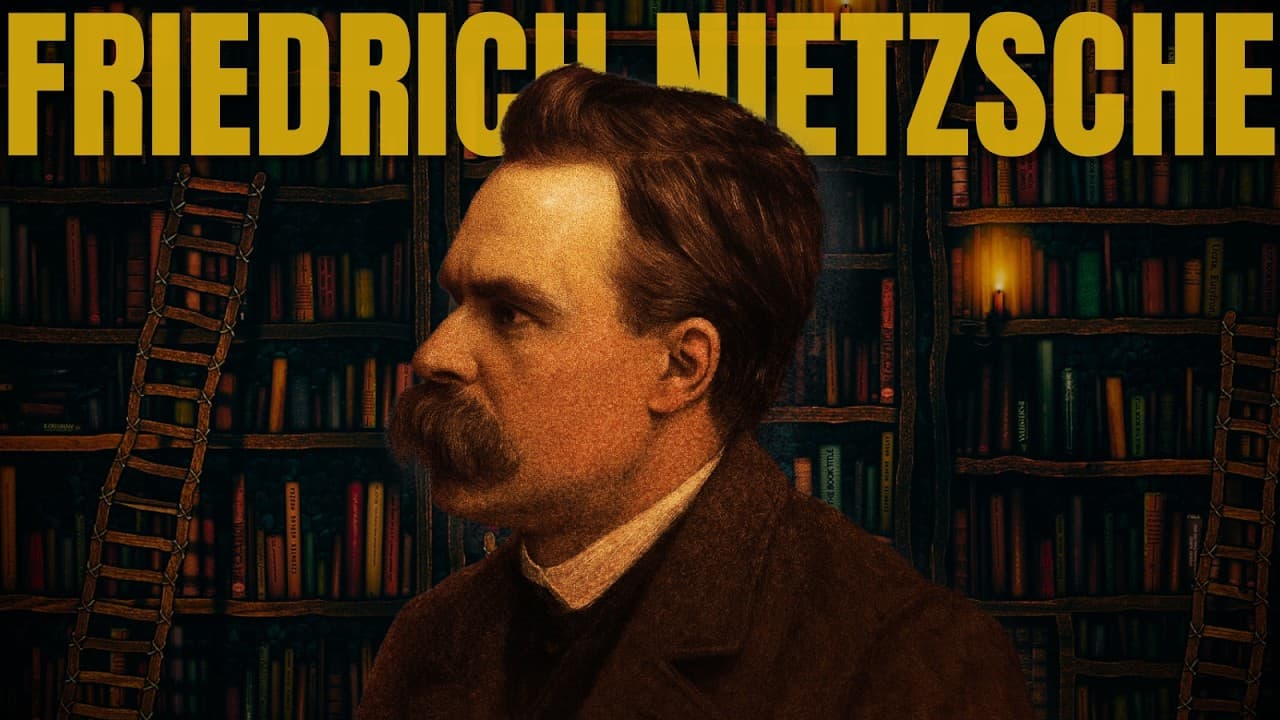
Nietzsche: God is Dead and We Have Killed Him
Friedrich Nietzsche diagnosed the death of God not as triumph but as catastrophe, recognizing that the foundation Western civilization had rested on for two thousand years had collapsed. This three-hour exploration traces his journey from pastor's son in Rocken to solitary philosopher, through his masterworks including The Birth of Tragedy, Thus Spoke Zarathustra, Beyond Good and Evil, and On the Genealogy of Morals. It examines his core concepts in depth: the death of God, will to power, eternal recurrence, the Ubermensch, amor fati, and the distinction between master and slave morality. The episode follows his friendship and break with Wagner, his decade of solitary wandering, his collapse in Turin, and the posthumous distortion of his work by his sister Elisabeth and the Nazi appropriation that followed. His influence on Freud, Heidegger, existentialism, Foucault, and Deleuze confirms that the questions Nietzsche raised about nihilism, values, and human flourishing remain urgently alive today.
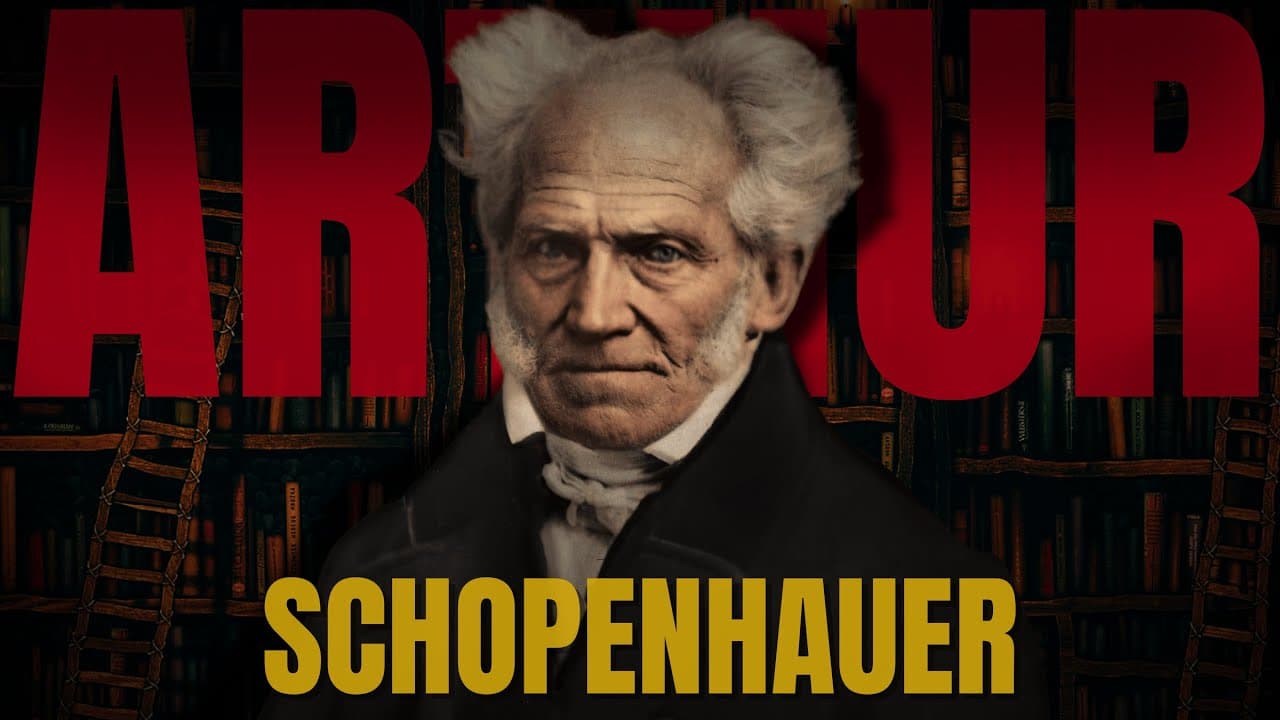
"A Man Can Do What He Wills, But He Cannot Will What He Wills"
Arthur Schopenhauer believed that the capacity to be alone was the truest mark of intellectual and spiritual development. For him, solitude was not merely the absence of others but the presence of oneself. This three-hour exploration examines Schopenhauer's philosophy from the ground up, tracing his life from the merchant's son in Danzig, through his father's death, his failed academic career, and his decades as a solitary hermit in Frankfurt. We then enter his philosophy: the blind Will that drives all existence, the pendulum of pain and boredom, and why most people cannot bear to be alone with themselves. Finally, we examine his answers, including art, contemplation, the denial of the Will, and the practical wisdom he offered those who chose to remain in the world.
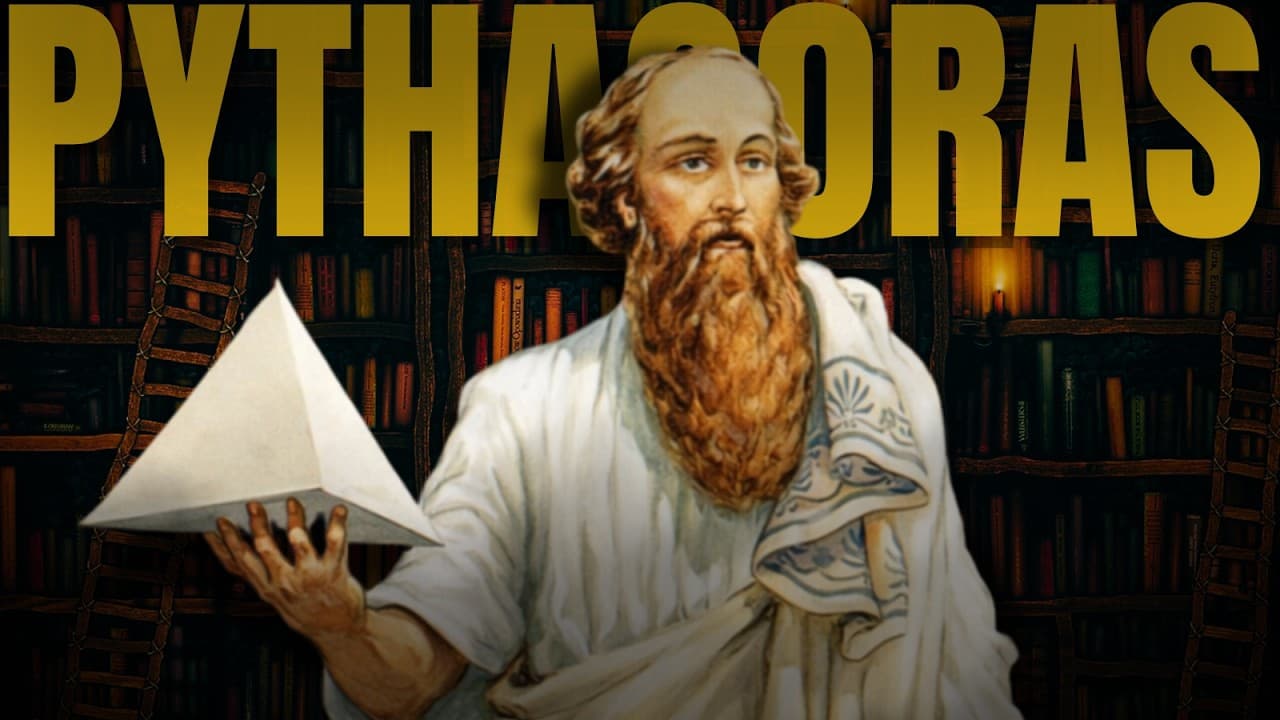
Can Mathematics Explain Reality?
Around 600 BCE, on the island of Samos...