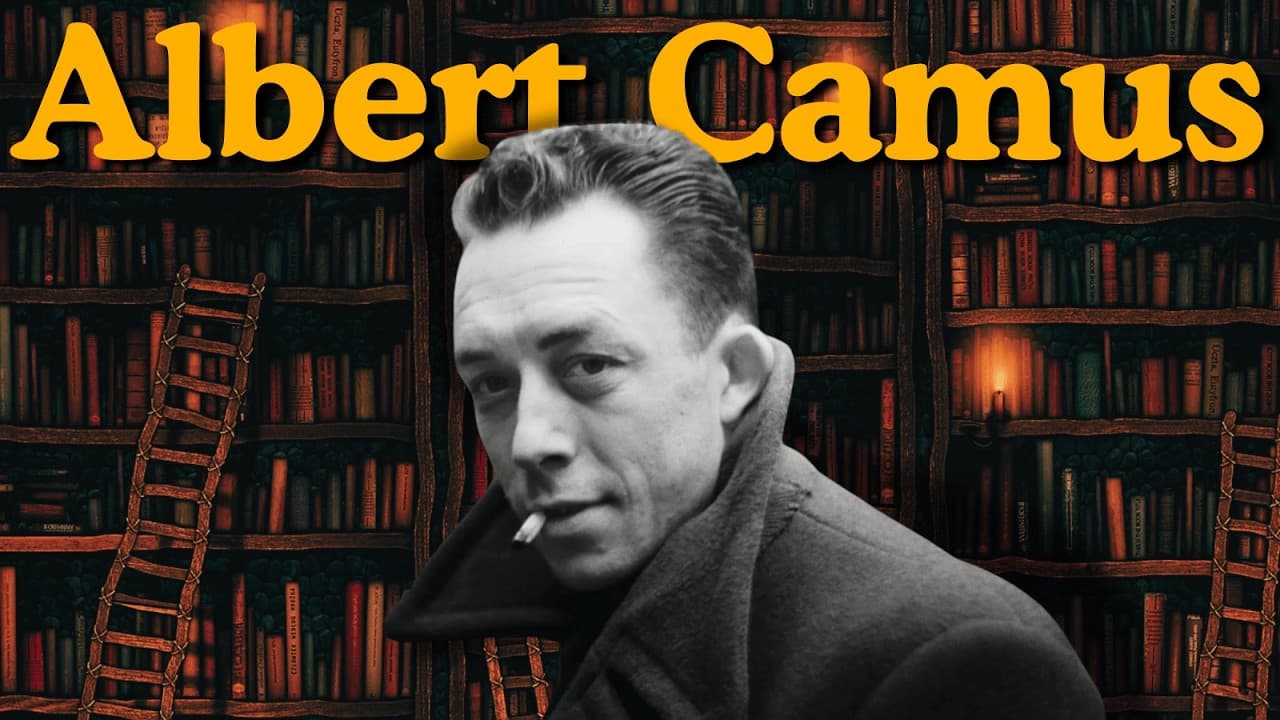
One Must Imagine Sisyphus Happy
Albert Camus's Complete Philosophy
Chapters
- 00:00:00Chapter 01: The Happiest Man in Hell
- 00:11:02Chapter 02: What Is the Absurd?
- 00:21:58Chapter 03: A Life in the Sun: Camus's Algeria
- 00:38:47Chapter 04: The Suicide Question
- 00:50:13Chapter 05: Philosophical Suicide and the Leap of Faith
- 01:02:14Chapter 06: Physical Suicide: Giving the Absurd Its Victory
- 01:14:11Chapter 07: The Three Consequences: Revolt, Freedom, Passion
- 01:25:28Chapter 08: The Myth of Sisyphus Explained
- 01:35:35Chapter 09: Absurd Creation: The Artist and the Conqueror
- 01:47:26Chapter 10: The Stranger: Meursault's Murder
- 01:55:37Chapter 11: The Trial: When Society Demands Meaning
- 02:02:37Chapter 12: The Gentle Indifference of the World
- 02:11:07Chapter 13: The Plague: Solidarity Without Hope
- 02:24:15Chapter 14: Dr. Rieux and Doing the Day's Work
- 02:35:25Chapter 15: The Rebel: From Absurd to Revolt
- 02:45:10Chapter 16: Why Revolution Becomes Tyranny
- 02:55:10Chapter 17: The Break with Sartre
- 03:08:54Chapter 18: Absurdism vs. Nihilism vs. Existentialism
- 03:22:34Chapter 19: Living Absurdly: Practical Absurdism
- 03:35:56Chapter 20: Contemporary Absurdism and the Meaning Crisis
- 03:48:10Chapter 21: The Absurd Happiness
- 04:06:47Chapter 22: We Must Imagine Sisyphus Happy
Full Transcript
Chapter 01: The Happiest Man in Hell
Imagine a man condemned to push a boulder up a mountain for all eternity. Imagine that every time he nears the summit, muscles straining under impossible weight, lungs burning in the thin air, hands torn and bleeding against rough stone, the boulder slips from his grasp and tumbles back down to the valley floor. Imagine that he watches it fall, bouncing and crashing down the slope he has just climbed. Imagine that he descends the mountain, step by weary step, to retrieve his burden and begin the ascent again. And again. And again. Forever, without rest, without reprieve, without hope of completion.
This is Sisyphus, the figure from Greek mythology who dared to trick the gods themselves. For his cunning and his defiance, they devised what they believed to be the most terrible punishment imaginable: utterly meaningless labor, endless repetition, eternal futility. The gods understood that mere physical torment would not suffice for this clever transgressor. No, they wanted something worse. They wanted to break his spirit. They condemned him to a task where consciousness itself becomes the torture, where awareness of the futility is the punishment.
But here is the question that Albert Camus, the French-Algerian philosopher and novelist, posed in nineteen forty two, during the darkest days of the Second World War: What if Sisyphus is happy? What if this man, fully conscious of his eternal punishment, pushing his rock up his mountain with absolute knowledge that it will fall again, is in fact the happiest man in all of mythology? What if his punishment is actually his liberation?
This question sounds absurd on its face. It seems almost cruel to suggest that a man condemned to eternal meaningless labor could be happy. Yet this question opens the door to one of the most profound and strangely hopeful philosophies of the twentieth century. Tonight, we explore absurdism, the philosophy of meaninglessness that somehow teaches us how to live. We follow Albert Camus through the sun-drenched landscapes of Algeria, through the occupied streets of wartime France, through novels of murder and plague, through philosophical essays that grapple with the darkest question philosophy can ask. And we discover why accepting that life has no ultimate meaning might actually free us to live more fully, more intensely, more joyfully than we ever imagined possible.
Albert Camus did not set out to create a philosophy of meaninglessness. He was not a pessimist by nature, not a gloomy German metaphysician brooding in shadowed libraries. He was a man of the Mediterranean, raised in poverty under the brilliant Algerian sun, shaped by the physical pleasures of swimming in the sea and playing football with friends. He loved life with an intensity that shines through every page he wrote. Yet he also recognized something that most of us spend our lives trying to avoid: the fundamental absurdity of human existence.
The absurd, for Camus, is not simply the observation that life is meaningless. That would be nihilism, and Camus was no nihilist. The absurd is something more specific, more dynamic, and ultimately more interesting. It is the confrontation between two realities: on one side, human beings who desperately need meaning, order, and clarity in the universe; on the other side, a universe that offers none of these things, that remains stubbornly silent in response to our deepest questions. The absurd arises in the collision between our demand for rational meaning and the world's irrational refusal to provide it.
Think of it this way. We are creatures who ask why. We cannot help ourselves. We look at suffering and ask why must we suffer. We look at death and ask why must we die. We look at our own existence and ask why am I here, what is my purpose, what does it all mean. These questions rise from the depths of human consciousness as naturally as breath. They define what it means to be human. We are meaning-seeking animals. We build elaborate structures of meaning, religions, philosophies, political ideologies, personal narratives, to answer these questions and make sense of our experience.
But the universe does not answer. It does not speak. It does not provide the clarity we crave. People die for no reason. Suffering distributes itself without regard to justice or desert. The world operates according to physical laws that have no interest in human hopes or human needs. We can study these laws, we can manipulate them for our purposes, but we cannot find in them the ultimate meaning we seek. The universe is not cruel, that would imply intention. It is simply indifferent. Silent. Absurd.
This confrontation between the human need for meaning and the world's silence is what Camus calls the absurd. It is not a property of the world alone, nor of human beings alone, but of the relationship between them. Take away either element, the human demand for meaning or the world's irrational silence, and the absurd disappears. But we cannot take away either element. We cannot stop being creatures who seek meaning. And we cannot force the universe to speak.
So what do we do? This is the question that animated all of Camus's work. Faced with this fundamental absurdity, how should we live? Do we despair? Do we lie to ourselves with comforting fictions? Do we end our lives if life has no justification? Or is there another way, a way that neither denies the absurd nor surrenders to it?
Camus's answer, developed across novels, plays, and philosophical essays, is rebellion. Not rebellion in the political sense, though that interested him too, but rebellion as a metaphysical stance. When faced with the absurd, we can choose to live fully and intensely without hope, without illusions, with clear-eyed lucidity about our condition. We can refuse to accept the verdict of meaninglessness as a reason for despair. We can say yes to life even when life offers us no ultimate justification for itself. This rebellion, this defiant affirmation of life in the face of absurdity, is the heart of Camus's philosophy.
And this brings us back to Sisyphus, who becomes for Camus the ultimate hero of the absurd. Sisyphus cannot escape his fate. He cannot make his labor meaningful. He cannot complete his task or win his freedom. The gods have ensured that his work will be eternally futile. But he can choose how he relates to his fate. He can choose his consciousness of it. And in that choice lies everything.
Camus imagines Sisyphus at the bottom of the mountain, having watched his boulder roll away yet again, preparing to climb down and retrieve it. This moment, the descent, the pause before beginning again, is crucial. This is the moment when Sisyphus is fully conscious of his condition. He sees clearly that his labor has no purpose, that it will never end, that the gods have condemned him to futility. In this moment, he could despair. The gods expect him to despair. They designed his punishment to produce despair.
But what if Sisyphus does not despair? What if he looks at his boulder, at his mountain, at his eternal task, and chooses to continue not in resignation but in rebellion? What if he embraces his fate fully, without illusions but also without surrender? What if his very consciousness of the absurdity of his condition becomes his victory over it? The gods can control his actions, but they cannot control his consciousness. They cannot make him despair. His scorn for them, his refusal to give them the satisfaction of his misery, becomes his freedom.
This is why Camus ends his essay The Myth of Sisyphus with one of the most striking sentences in twentieth-century philosophy: "One must imagine Sisyphus happy." Not content, not resigned, not numb to his suffering, but happy. Happy in his rebellion. Happy in his lucidity. Happy in the very struggle that the gods intended as torture. The struggle itself, the act of pushing the boulder, becomes sufficient. It needs no further justification.
Chapter 02: What Is the Absurd?
Before we can understand Camus's response to the absurd, we need to grasp more precisely what he means by this term. Absurdism has entered popular culture in diluted forms, sometimes confused with simple meaninglessness, sometimes with dark humor or random chaos. But for Camus, the absurd has a specific philosophical meaning that must be understood on its own terms.
The absurd is not a thing but a relationship. It emerges from the confrontation between two elements that cannot be reconciled. On one side stands the human being, equipped with reason, consciousness, and an insatiable hunger for clarity and meaning. We want to understand. We need to understand. Our minds are pattern-seeking machines that cannot stop trying to impose order on chaos, to find reasons behind events, to construct narratives that make sense of our experience. This is not a choice we make. It is built into the structure of human consciousness itself.
On the other side stands the world, which offers no clarity, no ultimate explanations, no cosmic purpose written into the fabric of reality. The world simply is. Things happen according to natural laws that have no concern for human desires or human needs. People are born and die. Stars explode and galaxies collide. Life evolves without direction or goal. The universe, examined honestly, reveals no inherent meaning, no divine plan, no rational structure that would satisfy our human need to know why.
The absurd arises in the collision between these two realities. It is neither in us nor in the world, but in the impossible marriage between the two. We are creatures who demand rational unity and clarity living in a world that offers neither. This, for Camus, is the fundamental human condition.
Chapter 04: The Suicide Question
The Myth of Sisyphus opens with what Camus calls the only truly serious philosophical problem: suicide. "There is but one truly serious philosophical problem, and that is suicide. Judging whether life is or is not worth living amounts to answering the fundamental question of philosophy. All the rest, whether the world has three dimensions, whether the mind has nine or twelve categories, comes afterwards."
This is a deliberately provocative beginning, but Camus means it seriously. If we accept that life has no ultimate meaning, if we acknowledge the absurd as our fundamental condition, then we must confront the question of whether existence is worth continuing. This is not an academic question for Camus. It is the most urgent question a human being can face.
Chapter 10: The Stranger: Meursault's Murder
The Stranger, published in 1942, the same year as The Myth of Sisyphus, is the fictional counterpart to Camus's philosophical essay. Where the essay examines the absurd theoretically, the novel embodies it in the life of a character: Meursault, a French Algerian office worker whose radical honesty and emotional detachment make him both a compelling and deeply unsettling protagonist.
Chapter 13: The Plague: Solidarity Without Hope
The Plague, published in 1947, represents a significant development in Camus's thought. Where The Stranger explored the absurd through individual experience, The Plague examines it through collective crisis. The novel is set in the Algerian city of Oran, which is struck by a devastating outbreak of bubonic plague. The disease arrives suddenly and incomprehensibly, just as the absurd arrives in individual consciousness. The city is quarantined, and its inhabitants must find ways to live under conditions of suffering, separation, and death that offer no ultimate meaning or consolation.
Dr. Bernard Rieux, the novel's narrator and central character, embodies Camus's ethic of revolt. He fights the plague not because he believes he can defeat it definitively, not because he expects divine intervention or cosmic justice, but because fighting is what a decent person does in the face of suffering. His struggle is Sisyphean. The plague will return. Death will always claim its victims. But the daily work of healing, of alleviating suffering where possible, of maintaining human solidarity in the face of inhuman catastrophe, is its own justification.
Chapter 17: The Break with Sartre
The quarrel between Camus and Sartre, which became public in 1952 with the publication of The Rebel and the subsequent exchange in Les Temps Modernes, represents one of the most significant intellectual ruptures of the twentieth century. The two men had been friends and allies during the Resistance and in the immediate postwar period. Both were associated with existentialism, though Camus always rejected the label. Both were public intellectuals whose writings shaped the cultural landscape of France and beyond. But their differences, which had always existed beneath the surface of their friendship, became irreconcilable over the question of political violence and revolutionary ideology.
Chapter 18: Absurdism vs. Nihilism vs. Existentialism
One of the most common misconceptions about Camus's philosophy is the confusion of absurdism with nihilism and existentialism. While these three philosophical positions share certain concerns and historical connections, they are fundamentally distinct in their conclusions and practical implications. Understanding these distinctions is crucial for grasping what Camus actually affirms and what he rejects.
Nihilism, in its strongest form, holds that life is meaningless and that this meaninglessness is a reason for despair. If nothing matters, then nothing is worth doing. Nihilism often leads to passive resignation, destructive behavior, or a cynical rejection of all values. The nihilist looks at the absence of cosmic meaning and concludes that human life is worthless.
Camus emphatically rejects this conclusion. Yes, the universe offers no ultimate meaning. But this does not make human life worthless. Quite the opposite. The absence of cosmic meaning liberates us from the tyranny of having to justify our existence by reference to some transcendent purpose. We are free to create value, to love, to struggle, to experience beauty and solidarity, precisely because these things need no cosmic justification. They are sufficient in themselves.
Existentialism, particularly as formulated by Sartre, holds that existence precedes essence, that human beings create their own meaning through choices and commitments. We are condemned to be free, in Sartre's phrase, and we must take full responsibility for the meanings we create. This is closer to Camus's position, but there is a crucial difference. Sartre believed that we can genuinely create meaning through authentic choice. Camus was more skeptical. He did not think that human choice could fill the void left by the absence of cosmic meaning. The absurd persists regardless of our choices. We cannot create ultimate meaning any more than we can find it. What we can do is live fully and honestly in the face of this impossibility.
Chapter 22: We Must Imagine Sisyphus Happy
We return, at the end, to where we began: to the figure of Sisyphus at the bottom of his mountain, preparing to descend once more and retrieve his boulder. This image has accompanied us throughout our exploration of Camus's philosophy, and now we can understand it more fully.
Sisyphus is not happy despite his condition. He is happy because of how he relates to his condition. His happiness is not the happiness of ignorance or denial. It is the happiness of lucidity, of conscious revolt, of defiant affirmation in the face of futility. He knows that his labor is meaningless. He knows that the boulder will always roll back down. He knows that the gods designed his punishment to crush his spirit. And he refuses to be crushed.
The descent, Camus writes, is performed in sorrow. But it can also be performed in joy. When Sisyphus turns to face his rock once more, when he walks down the mountain with full consciousness of his fate, he is superior to that fate. His lucidity makes him greater than his punishment. His revolt makes him free in the only way that matters: free in his consciousness, free in his attitude, free in his refusal to surrender his dignity to forces beyond his control.
One must imagine Sisyphus happy. This is not a command to pretend. It is an invitation to see clearly, to recognize that happiness is possible even, perhaps especially, in the midst of struggle. It is an affirmation that life does not need cosmic justification to be worth living. It is a declaration that the human spirit, fully conscious of its absurd condition, can find in that very consciousness a source of strength, dignity, and even joy.
This is the gift of absurdism: not a solution to the problem of meaning, but a way of living without one. Not an answer to the silence of the universe, but a way of singing in spite of it. Not a philosophy of despair, but a philosophy of lucid, defiant, joyful revolt against the conditions of our existence. We are all Sisyphus. We all push our boulders up our mountains. We all watch them roll back down. And we all face the choice of how to walk back down that mountain. Camus invites us to walk with consciousness, with courage, and with the strange, fierce happiness that comes from refusing to let the absurd have the last word.
Sources & Works Cited
- 1.Camus, Albert. The Myth of Sisyphus and Other Essays (1991)
- 2.Camus, Albert. The Stranger (1988)
- 3.Camus, Albert. The Plague (1991)
- 4.Camus, Albert. The Rebel (1991)
- 5.Camus, Albert. Lyrical and Critical Essays (1970)
- 6.Camus, Albert. The First Man (1996)
- 7.Aronson, Ronald. Camus and Sartre (2004)
- 8.Zaretsky, Robert. A Life Worth Living: Albert Camus and the Quest for Meaning (2013)
- 9.Todd, Olivier. Albert Camus: A Life (1997)
- 10.Hughes, Edward J. (ed.). The Cambridge Companion to Camus (2007)
- 11.Stanford Encyclopedia of Philosophy. Albert Camus
- 12.Internet Encyclopedia of Philosophy. Absurdism
Related Episodes
The Philosophy of Existential Nihilism
Nothing matters. These two words have haunted Western philosophy since the nineteenth century, when the foundations of meaning began to crack and the greatest minds were forced to confront a terrifying possibility: that the universe has no purpose and human life has no cosmic significance. This episode traces the complete history of existential nihilism, from Schopenhauer's suffocating pessimism through Dostoevsky's feverish challenges in the Grand Inquisitor, to Nietzsche's shattering diagnosis of the death of God. It then explores the existentialist responses: Heidegger's confrontation with the nothing, Sartre's radical freedom, and Camus's philosophy of the absurd. The journey concludes with Viktor Frankl's will to meaning forged in Auschwitz, Thomas Nagel's analytical treatment of absurdity, and the question as it remains for us today.
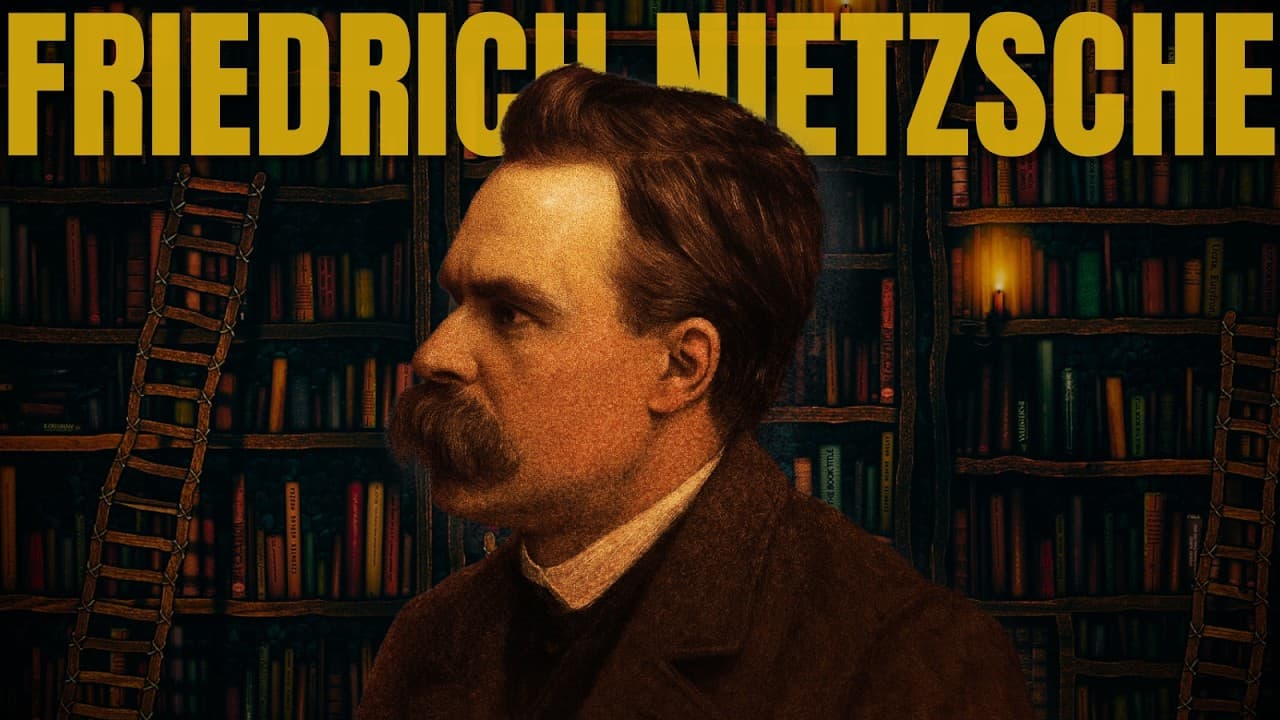
Nietzsche: God is Dead and We Have Killed Him
Friedrich Nietzsche diagnosed the death of God not as triumph but as catastrophe, recognizing that the foundation Western civilization had rested on for two thousand years had collapsed. This three-hour exploration traces his journey from pastor's son in Rocken to solitary philosopher, through his masterworks including The Birth of Tragedy, Thus Spoke Zarathustra, Beyond Good and Evil, and On the Genealogy of Morals. It examines his core concepts in depth: the death of God, will to power, eternal recurrence, the Ubermensch, amor fati, and the distinction between master and slave morality. The episode follows his friendship and break with Wagner, his decade of solitary wandering, his collapse in Turin, and the posthumous distortion of his work by his sister Elisabeth and the Nazi appropriation that followed. His influence on Freud, Heidegger, existentialism, Foucault, and Deleuze confirms that the questions Nietzsche raised about nihilism, values, and human flourishing remain urgently alive today.
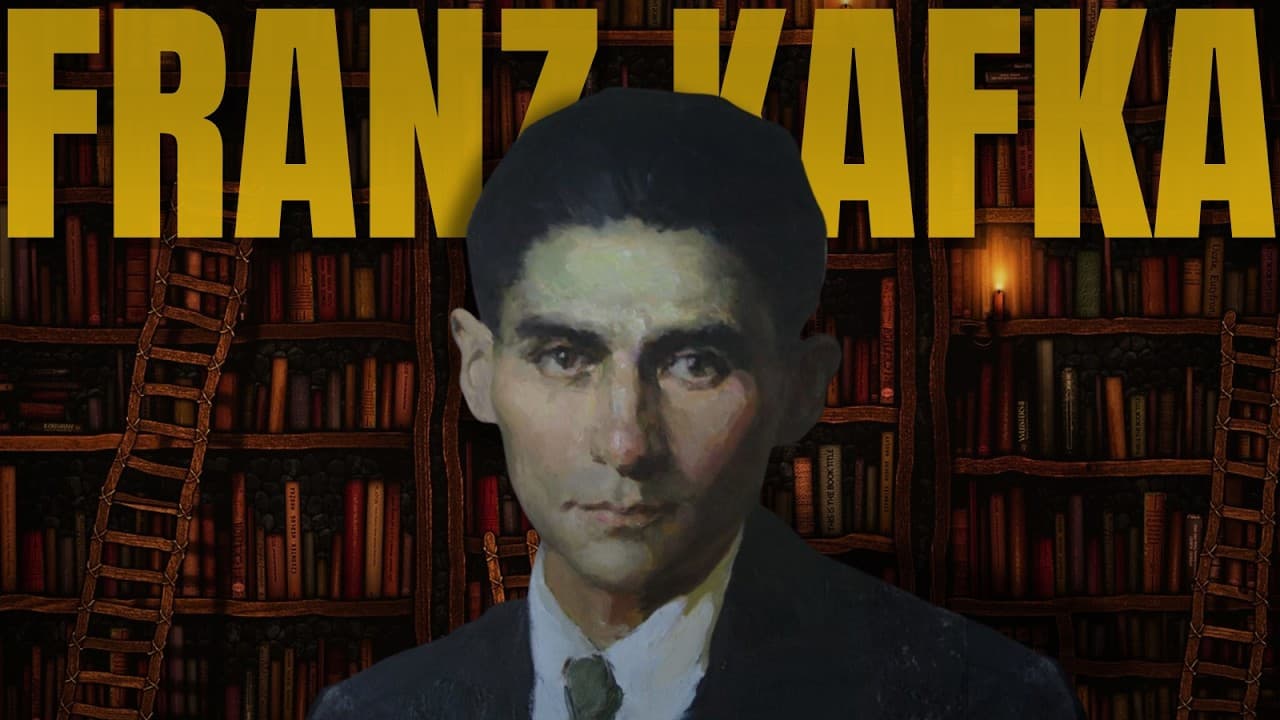
"What If I Slept A Little More?"
Franz Kafka was born in Prague in 1883 into three overlapping circles of exclusion: Czech majority, German minority, and Jewish community within that minority. This episode traces his life under the overwhelming shadow of his father Hermann, his night writing alongside exhausting insurance work, and the tuberculosis that killed him at forty. It explores his major works in detail, including The Metamorphosis, The Trial, and The Castle, alongside the letters to Felice and Milena and the devastating Letter to His Father that was never sent. The episode examines Kafka's central themes of waking into strangeness, guilt without crime, authority that cannot be reached, and the body that fails and hungers. It closes with Max Brod's refusal to burn the manuscripts and the emergence of the word Kafkaesque as a name for our modern condition.