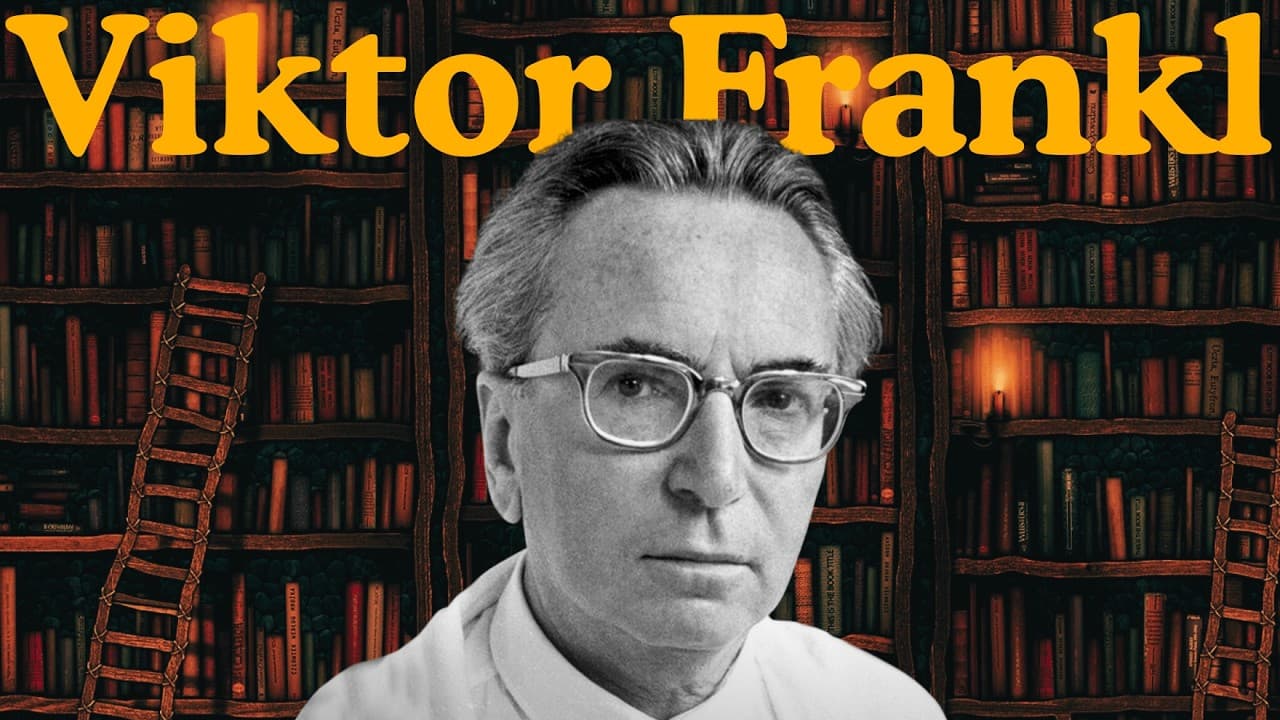
Man's Search for Meaning
Viktor Frankl's Complete Philosophy
Chapters
- 00:00:00Chapter 1: Everything Can Be Taken
- 00:10:35Chapter 2: A Boy in Vienna
- 00:20:20Chapter 3: The Third Viennese School
- 00:30:29Chapter 4: The Choice That Defined a Life
- 00:40:38Chapter 5: Arrival in Hell
- 00:50:48Chapter 6: The Manuscript in the Coat
- 01:00:58Chapter 7: The Psychology of the Camps
- 01:12:00Chapter 8: Who Survived and Why
- 01:22:00Chapter 9: The Last Piece of Bread
- 01:32:00Chapter 10: The Inner Life in Extremity
- 01:43:00Chapter 11: Liberation and Loss
- 01:55:00Chapter 12: Nine Days in 1946
- 02:06:00Chapter 13: Man's Search for Meaning
- 02:18:00Chapter 14: The Will to Meaning
- 02:25:02Chapter 15: Logotherapy in Practice
- 02:29:53Chapter 16: Love, Suffering, and Tragic Optimism
- 02:33:23Chapter 17: Frankl's Enduring Legacy
- 02:38:45Chapter 18: He Who Has a Why
Sources & Works Cited
- 1.Frankl, Viktor E.. Man's Search for Meaning (1946)
- 2.Frankl, Viktor E.. The Will to Meaning: Foundations and Applications of Logotherapy (1969)
- 3.Frankl, Viktor E.. The Doctor and the Soul (1955)
- 4.Frankl, Viktor E.. Yes to Life: In Spite of Everything (2020)
- 5.Pytell, Timothy. Viktor Frankl's Search for Meaning: An Emblematic 20th-Century Life (2015)
- 6.Stanford Encyclopedia of Philosophy. Viktor Frankl
Related Episodes
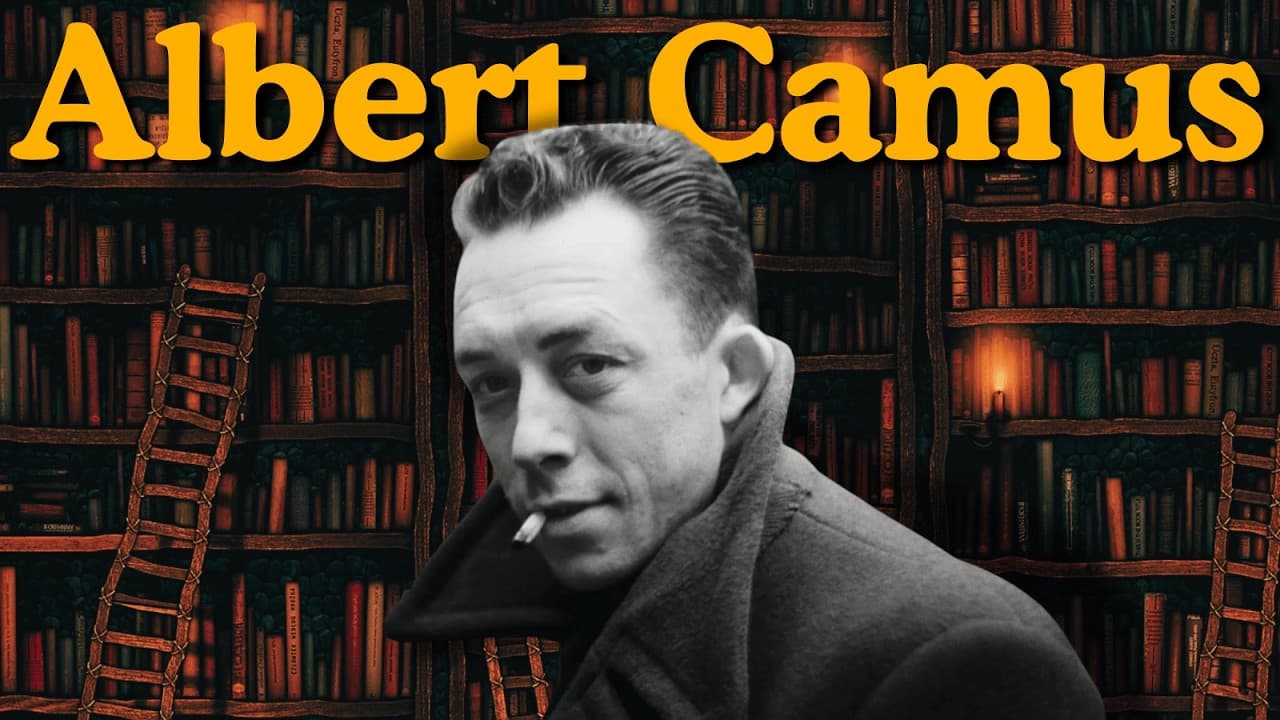
One Must Imagine Sisyphus Happy
What if a man condemned to push a boulder up a mountain for eternity is actually happy? This question opens Albert Camus's philosophy of the Absurd, the confrontation between our need for meaning and the universe's profound silence. Over four hours, we follow Camus from sun-drenched Algeria through wartime France, through The Stranger and The Plague, through his philosophical essays and his break with Sartre. We distinguish absurdism from both nihilism and existentialism, and discover why accepting meaninglessness might liberate us to live more fully than we ever imagined.
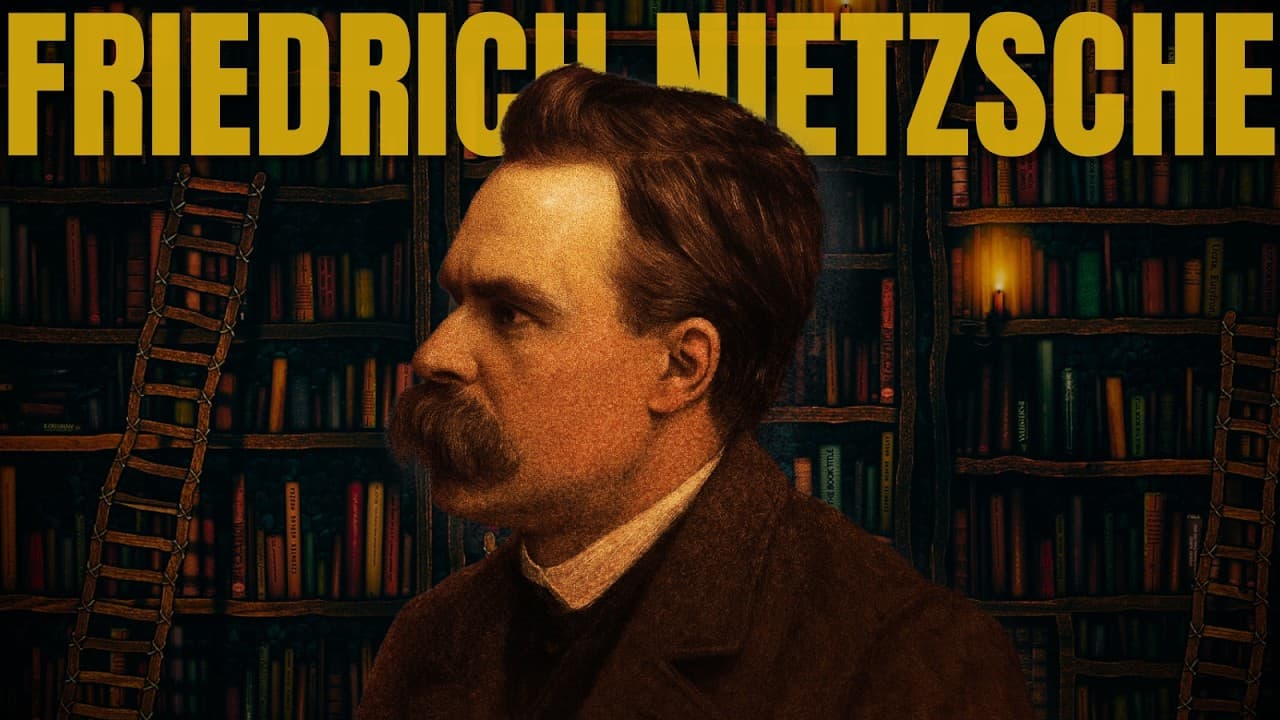
Nietzsche: God is Dead and We Have Killed Him
Friedrich Nietzsche diagnosed the death of God not as triumph but as catastrophe, recognizing that the foundation Western civilization had rested on for two thousand years had collapsed. This three-hour exploration traces his journey from pastor's son in Rocken to solitary philosopher, through his masterworks including The Birth of Tragedy, Thus Spoke Zarathustra, Beyond Good and Evil, and On the Genealogy of Morals. It examines his core concepts in depth: the death of God, will to power, eternal recurrence, the Ubermensch, amor fati, and the distinction between master and slave morality. The episode follows his friendship and break with Wagner, his decade of solitary wandering, his collapse in Turin, and the posthumous distortion of his work by his sister Elisabeth and the Nazi appropriation that followed. His influence on Freud, Heidegger, existentialism, Foucault, and Deleuze confirms that the questions Nietzsche raised about nihilism, values, and human flourishing remain urgently alive today.
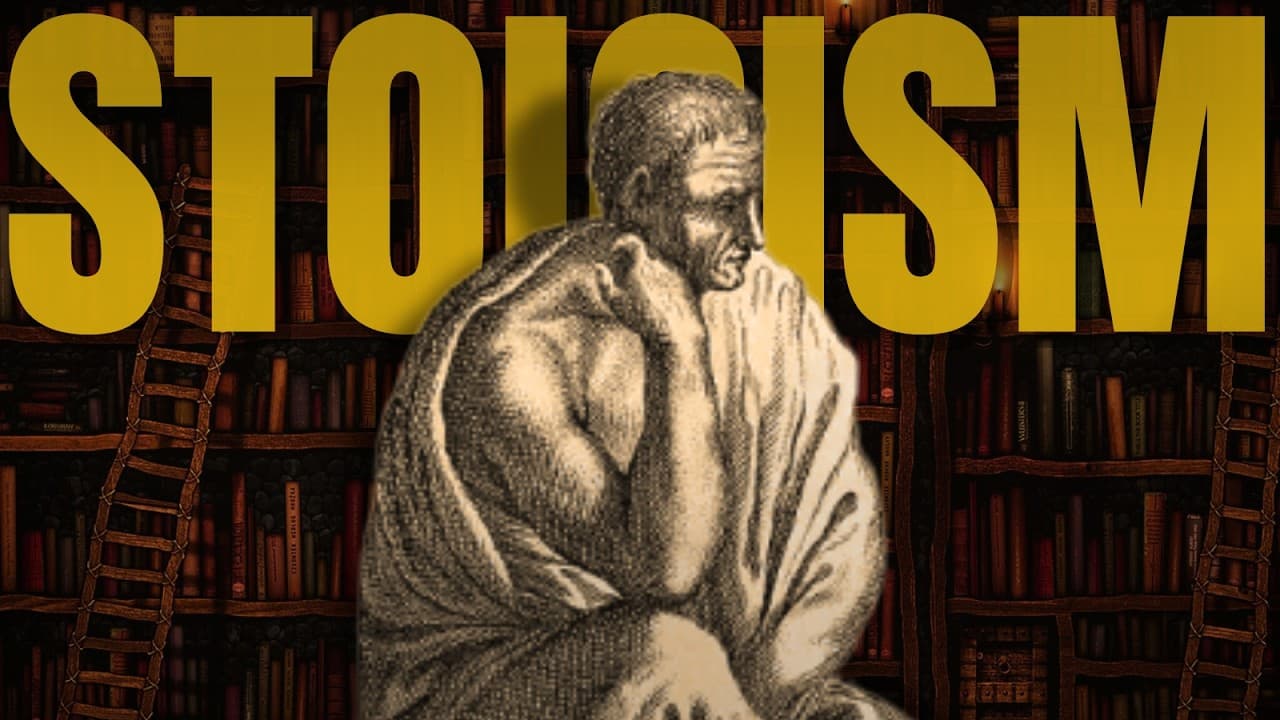
Stoic Philosophy for Sleep
This gentle, three-hour journey explores ancient Stoic wisdom through the teachings of Marcus Aurelius, Seneca, and Epictetus. You will encounter the dichotomy of control, the four cardinal virtues, and the daily practices these philosophers used to cultivate inner peace. Passages from the Meditations, the Letters to Lucilius, and the Enchiridion are presented in a calm, contemplative style suited for restful listening. Whether you are discovering Stoicism for the first time or returning to these texts as old companions, let these timeless insights settle your mind as you drift toward sleep.