
Divine Hiddenness and Reasonable Nonbelief
The Problem of God's Silence
Chapters
- 00:00:00The Silence
- 00:08:04What Is Divine Hiddenness?
- 00:16:20The Biblical Witness
- 00:24:45The Dark Night
- 00:34:33Mother Teresa's Letters
- 00:44:07Schellenberg's Argument
- 00:52:29Who Are the Nonresistant Nonbelievers?
- 01:00:57The Free Will Defense
- 01:11:04The Soul-Making Defense
- 01:21:54The Relationship Response
- 01:30:15The Problem Deepened
- 01:40:19Hiddenness and Evil
- 01:51:55Atheism and the Argument
- 02:02:07Living with Hiddenness
- 02:11:44The Question That Remains
Full Transcript
Chapter 01: The Silence
A woman kneels beside a hospital bed. Her daughter, eight years old, has been unconscious for three days. The doctors have done what they can. Now there is only waiting. The woman prays. She has prayed before, casually, gratefully, but this is different. This is begging. She asks for a sign, any sign, that someone is listening, that her daughter will wake. She waits. The machines beep their steady rhythm. The fluorescent lights hum. Nothing else. No voice. No warmth. No sense of presence. Just the white room and the mechanical breathing and the silence.
She prays again the next night, and the night after. The words feel hollow now, like throwing stones into a well so deep you never hear them land. On the fourth day her daughter wakes. The woman weeps with relief and thanks God. But the question remains, quieter now but still there: Why did he not answer? Why the silence when she needed him most? Was the recovery his response, or simply what was going to happen anyway? She cannot tell. And that uncertainty, that inability to distinguish between providence and chance, stays with her for years.
A man loses his wife to cancer. He has been a believer his whole life. He prays throughout the illness, not just for healing but for strength, for understanding, for some sense that God is present in the suffering. He feels nothing. No comfort. No presence. No answer. His wife dies. He continues to pray for months afterward, but the words feel like they are falling into empty space. Eventually he stops. Not because he has decided God does not exist, but because the silence became too painful. He cannot keep talking to someone who never responds.
A young woman raised in a devout household goes to university. She encounters arguments against God's existence for the first time. She takes them seriously. She does not want to lose her faith; it has been the foundation of her life. She prays earnestly, asking God to reveal himself, to give her some reason to continue believing. She reads theology. She talks to her pastor. She waits. Months pass. Nothing comes. She loses her faith, not through anger or rebellion, but through a slow, painful erosion. She wanted to believe. She tried to believe. But in the end, the silence was louder than any argument for God's existence.
These stories, and millions like them, form the experiential core of what philosophers call the problem of divine hiddenness. It is not primarily an abstract argument, though it has been formulated as one. It is first and foremost a human experience: the experience of seeking God and finding silence.
Chapter 02: What Is Divine Hiddenness?
The problem of divine hiddenness begins with a simple observation: if God exists, he is not obvious. His existence is not self-evident in the way that the existence of the sun is self-evident to anyone who steps outside on a clear day. Reasonable, intelligent, sincere people disagree about whether God exists. Some search for him and find nothing. Some pray and hear nothing. Some want to believe and cannot.
This might not seem like a problem. Perhaps God has reasons for remaining hidden. Perhaps some degree of mystery is appropriate when dealing with the divine. But the problem sharpens considerably when we add a specific theological claim: that God is perfectly loving and desires a personal relationship with human beings.
If God is perfectly loving, he would want what is best for each person he loves. If what is best for us includes a relationship with God, then God would want that relationship. If God wants that relationship, he would not remain hidden from those who are willing and able to enter into it. He would make himself known, at least enough that those who seek him sincerely could find him.
But many people do seek him sincerely and do not find him. They are not resisting God. They are not refusing to believe out of arrogance or stubbornness. They genuinely want to know if God exists. They are open to belief. But they cannot believe because they lack sufficient evidence or experience. They are, in the language of the philosophical literature, nonresistant nonbelievers.
The existence of nonresistant nonbelievers creates a tension with the idea of a perfectly loving God. A perfectly loving God would not permit people who are willing to believe, who are seeking him, who are open to relationship with him, to remain in a state of nonbelief through no fault of their own. Yet this is exactly what seems to happen. Therefore, either God is not perfectly loving, or God does not exist, or there is some explanation we have not yet found.
This is the problem of divine hiddenness in its simplest form. It is distinct from the problem of evil, though related to it. The problem of evil asks why God permits suffering. The problem of hiddenness asks why God permits confusion about his very existence. Both are challenges to the idea of a good, loving, powerful God, but they target different aspects of that idea.
The problem is also personal in a way that many philosophical problems are not. People live with it. They struggle with it. For some, it is the central crisis of their spiritual lives. They do not experience it as an abstract logical puzzle but as a wound, a source of anguish that shapes their relationship to faith, doubt, and the possibility of meaning.
Chapter 03: The Biblical Witness
The experience of divine hiddenness is not new. It runs through the sacred texts of the Abrahamic traditions like a dark thread, present even in scriptures that proclaim God's presence and power.
The Psalms are full of it. "How long, O Lord? Will you forget me forever? How long will you hide your face from me?" cries the psalmist in Psalm 13. "My God, my God, why have you forsaken me?" asks Psalm 22, words that Jesus himself would later cry from the cross. "Why do you stand far off, O Lord? Why do you hide yourself in times of trouble?" demands Psalm 10. These are not the words of atheists or skeptics. They are the words of believers, people who trust in God and yet experience his absence.
The book of Job is the most extended treatment of divine hiddenness in the Hebrew Bible. Job is a righteous man who suffers terribly. He loses his children, his wealth, his health. His friends tell him that his suffering must be punishment for sin, but Job knows he is innocent. He demands an audience with God. He wants to present his case, to understand why he is suffering, to hear from God himself. But God is silent. For most of the book, Job cries out and receives no answer.
When God finally speaks, it is not to explain the suffering. It is to remind Job of the vastness of creation and the limits of human understanding. "Where were you when I laid the foundation of the earth?" God asks. "Have you entered the storehouses of the snow?" The answer to Job's suffering is not an explanation but an encounter, not an argument but a presence. And even this presence comes only after long silence, and it does not answer the question Job actually asked.
The prophet Isaiah offers a striking statement: "Truly you are a God who hides himself, O God of Israel, the Savior." This is not a complaint but a declaration, a recognition that hiddenness is part of God's nature. The God of Israel is a saving God, but he is also a hiding God. Both are true simultaneously.
The New Testament adds its own layers. Jesus, who Christians believe is God incarnate, is himself hidden in plain sight. He is born in obscurity. He teaches in parables that conceal as much as they reveal. When asked for signs, he sometimes refuses. Even his resurrection appearances are ambiguous: the disciples on the road to Emmaus do not recognize him until the moment he vanishes. The divine presence takes forms that are easy to miss, easy to misinterpret, easy to doubt.
Paul writes of seeing "through a glass darkly," of knowing in part, of a time when full knowledge will come but has not yet arrived. The entire New Testament assumes a condition of partial knowledge, of faith rather than sight, of trust in what is not fully visible.
These biblical texts suggest that divine hiddenness is not a modern philosophical invention but a perennial feature of religious experience. The faithful have always grappled with God's absence. They have cried out, questioned, protested, and persisted. The question is not whether hiddenness exists but what it means. Is it a test? A gift? A failure of the seeker? A feature of the divine nature? Or evidence that God is not there at all?
Chapter 04: The Dark Night
The Christian mystical tradition offers one of the most profound responses to divine hiddenness: the concept of the dark night of the soul, developed most fully by the sixteenth-century Spanish mystic John of the Cross.
John was a Carmelite monk and priest who experienced both external persecution and intense inner spiritual suffering. His great poem, "The Dark Night," and his prose commentary on it describe a stage of the spiritual journey in which God withdraws all sense of his presence. The soul that had once felt God's nearness, that had experienced warmth and consolation in prayer, finds itself in complete darkness. Prayer becomes dry. The spiritual practices that once brought comfort now bring nothing. The soul feels abandoned, alone, lost.
John insists that this is not a failure. It is a necessary stage of spiritual growth. In the earlier stages of the spiritual life, God provides consolations: feelings of warmth, peace, love, closeness. These consolations are real, but they are also training wheels. The soul at this stage is motivated partly by the good feelings that prayer and devotion bring. It loves God, but it also loves the feelings that come with loving God. The attachment to the feelings can become an obstacle. The soul needs to learn to love God for his own sake, not for the consolation he provides.
The dark night is God's method for teaching this lesson. By withdrawing all feeling, all sense of his presence, God forces the soul to continue the spiritual journey without the rewards that had previously motivated it. The soul must choose to pray even when prayer feels pointless. It must choose to believe even when belief feels empty. It must choose to love even when love returns nothing.
This is a severe teaching. It means that the very absence that causes so much anguish is, according to John of the Cross, a sign of spiritual progress, not spiritual failure. The darkness is not God's rejection but his deeper invitation. He is not hiding because he does not care. He is hiding because he wants the soul to grow beyond its dependence on spiritual consolation into a purer, more selfless love.
The dark night has two phases in John's framework. The "dark night of the senses" involves the withdrawal of sensory consolation, the feelings of warmth and joy that accompany early spiritual practice. The "dark night of the soul" is deeper and more painful: it involves the withdrawal of all spiritual comfort, leaving the soul in a state of desolation, doubt, and apparent abandonment. This second night can last years, even decades. It is the most painful and the most transformative stage of the spiritual journey.
John of the Cross was not writing in the abstract. He experienced the dark night himself. His poetry conveys the anguish of a soul that loves God and cannot find him, that seeks light and finds only darkness, that cries out and hears only silence. But it also conveys the paradoxical discovery that the darkness itself is a form of union with God, that the absence is a deeper form of presence, that the emptying is a preparation for a fullness that the soul in its earlier state could not have received.
This is a profound and difficult teaching. It means that hiddenness, for John of the Cross, is not a problem to be solved but a mystery to be entered. The proper response is not to argue about whether God exists but to endure the darkness trustingly, believing that it serves a purpose even when that purpose is invisible.
But this response is available only to those who already believe. For the person who does not know whether God exists, the concept of the dark night is not helpful. It assumes a pre-existing relationship with God that is being deepened through suffering. But what about those who have never had such a relationship? What about those who seek God and find nothing at all, not even a dark night that could be interpreted as spiritual progress?
Chapter 05: Mother Teresa's Letters
The most startling modern example of prolonged divine hiddenness came to light in 2007 with the publication of Mother Teresa's private letters. For nearly fifty years, from 1948 until her death in 1997, Mother Teresa experienced what she described as the complete absence of God.
The letters are devastating in their honesty. "Where is my faith?" she wrote. "Even deep down, there is nothing but emptiness and darkness." To her spiritual director she confessed: "I am told God loves me, and yet the reality of darkness and coldness and emptiness is so great that nothing touches my soul." She described the experience as torture: "The silence and the emptiness is so great that I look and do not see, listen and do not hear."
This was not a brief crisis. It lasted decades. Mother Teresa continued her work among the poorest of the poor in Calcutta, founded a religious order, became one of the most recognized figures in the world, received the Nobel Peace Prize, and was regarded by millions as a living saint. All while experiencing nothing of God's presence. All while feeling that God was absent, silent, perhaps nonexistent.
The contrast between her public image and her private experience is striking. Externally, she radiated faith and joy. Internally, she felt empty. She smiled at the world while crying inside. She encouraged others to trust in God while struggling to believe he was there. She became, without anyone knowing it, one of the most profound examples of faith maintained in the absence of evidence or experience.
Her spiritual directors interpreted the darkness in terms of the mystical tradition. They told her she was experiencing the dark night of the soul described by John of the Cross, that the absence was a sign of deep spiritual intimacy, that God was closer to her than ever even though she could not feel him. Whether she found this interpretation convincing is unclear. She accepted it intellectually. But the pain did not diminish. The absence remained real, unbroken, for half a century.
The publication of her letters sparked intense discussion. Some believers saw confirmation of her sanctity: she persevered in faith despite feeling nothing, which proved the depth of her commitment. Others saw something more troubling: that even a saint, someone whose life was devoted entirely to God, could experience complete divine absence for half a century. If Mother Teresa could pray that intensely, that faithfully, and hear nothing, what hope is there for anyone else?
But believers pointed out that she did not abandon her faith. She continued to believe, continued to serve, continued to pray. Her faith was not based on feelings. It was based on something else: commitment, perhaps, or obedience, or the bare decision to continue even when continuation brought no reward. They saw this as admirable. Faith that persists without consolation is purer than faith that depends on experience.
Critics asked a different question. If God is perfectly loving and desires relationship, why would he leave one of his most devoted servants in darkness for fifty years? What possible purpose could this serve? The dark night is supposed to be temporary, a stage on the way to deeper union. But Mother Teresa's night never ended. There was no dawn. Just fifty years of darkness, followed by death. If this is how God treats his saints, what does it say about his love?
Chapter 06: Schellenberg's Argument
In 1993, the Canadian philosopher J.L. Schellenberg published Divine Hiddenness and Human Reason, a book that transformed the philosophical discussion. Schellenberg took the experience of divine hiddenness and gave it rigorous logical form.
His argument proceeds as follows:
If a perfectly loving God exists, he would be open to a personal relationship with every person capable of such a relationship.
If God is open to such a relationship, he would ensure that every such person is able to believe in his existence, since belief is a necessary condition for personal relationship.
But there are people who are capable of relationship with God, who are not resisting such a relationship, and yet who do not believe in God's existence. These are the nonresistant nonbelievers.
Therefore, a perfectly loving God does not exist.
The argument is deceptively simple. Its force lies in the analogy with human love. Consider a loving parent. A loving parent would not hide from their child. They would not refuse to communicate. They would not allow the child to doubt whether the parent exists or cares. A loving parent is present, available, responsive. If God is a loving parent, he should be present, available, responsive. But he is not. At least not to everyone who seeks him.
Schellenberg is not the first to ask it. Blaise Pascal, writing in the seventeenth century, called God deus absconditus, the hidden God. Pascal saw the hiddenness of God as part of the human condition: we live in twilight, with just enough light to seek and just enough darkness to stumble. He thought this ambiguity was intentional, designed to humble the proud and draw the sincere. But he also felt the weight of it. He knew that hiddenness could be a barrier to faith as much as an invitation.
And the difficulty is not merely intellectual. It is existential. It is the experience of absence. The woman praying by the hospital bed feels it. The man who loses his faith despite trying to keep it feels it. The philosopher who examines the arguments and finds them wanting feels it. The person born in a place where the gospel is never preached never even gets the chance to feel it; she simply never knows.
The key concept in Schellenberg's argument is nonresistant nonbelief. A nonresistant nonbeliever is someone who does not believe in God, whose nonbelief is not the result of resistance to God. They are not refusing to believe out of pride, rebellion, or desire to avoid moral obligations. They are simply people who have examined the evidence and found it insufficient, or who have never been exposed to adequate evidence, or who have sought God sincerely and found nothing.
Schellenberg insists that such people exist. They are not hypothetical. They are real. There are sincere seekers who have prayed, studied, reflected, and come up empty. There are people raised in non-theistic cultures who have never had adequate exposure to the idea of a personal God. There are former believers who lost their faith despite desperately wanting to keep it. These people are not resisting God. They are open to belief. They simply cannot believe, because the evidence and experience available to them are insufficient.
If God is perfectly loving, he would not allow this. He would provide sufficient evidence or experience to enable belief in anyone who is open to it. He does not need to provide proof or overwhelm anyone's free will. He simply needs to make belief possible for those who are willing to believe. And for some people, he apparently has not done this.
Chapter 07: Who Are the Nonresistant Nonbelievers?
The strength of Schellenberg's argument depends on whether nonresistant nonbelievers actually exist. If every nonbeliever is resisting God in some way, even unconsciously, then the argument fails. But if there are genuine cases of people who would believe if they could but cannot, then the argument has real force.
Consider several types of cases.
First, there are the sincere seekers. These are people who actively search for God. They pray. They attend religious services. They read theology and philosophy. They meditate. They examine their hearts for any resistance that might be blocking them. And after years of searching, they find nothing convincing. Not because they refuse to believe, but because the evidence and experience they encounter do not add up to a convincing case.
These cases are well documented. Many ex-believers describe exactly this experience: a gradual erosion of faith despite earnest efforts to maintain it. They did not choose to stop believing. Belief simply became impossible as the arguments wore thin and the silence deepened. They would have preferred to keep believing. Many describe the loss of faith as a bereavement.
Second, there are the geographically and culturally isolated. Billions of people throughout history have lived in cultures where the concept of a personal, loving God as described by Christianity, Judaism, or Islam was simply unknown. A person born in pre-contact Australia, pre-Columbian South America, or much of East Asia would never have encountered the specific God that Schellenberg's argument addresses. Their nonbelief is not the result of resistance. It is the result of circumstances entirely beyond their control.
This raises a profound question about divine fairness. If belief in God is a condition for relationship with God, and if some people never have the opportunity to form such a belief through no fault of their own, how is this compatible with perfect love? A loving God, one might think, would ensure that the opportunity for belief is available to everyone, not just those lucky enough to be born in the right time and place.
Third, there are those raised in non-theistic environments. Someone raised by atheist parents, educated in secular schools, surrounded by a culture that treats religion as outdated superstition, faces significant barriers to belief even if they are temperamentally open to it. The social and intellectual environment shapes what seems plausible, and in a thoroughly secular environment, belief in God may seem as implausible as belief in fairies.
Is this person resisting God? Not in any meaningful sense. They are simply responding to the evidence and cultural pressures available to them, just as a person raised in a deeply religious environment responds to the evidence and pressures available to them. If God wanted this person to believe, he could provide additional evidence or experience that would overcome the cultural barriers. That he does not seems difficult to reconcile with perfect love.
Fourth, there are the emotionally wounded. People who have experienced religious abuse, who have been manipulated by religious authority figures, who have seen religion used to justify cruelty or oppression, may find belief psychologically impossible even if they are intellectually open to it. The emotional scars block the path to faith. Is this resistance? It seems unfair to call it that. These people did not choose their wounds. They were inflicted by others. And if God is perfectly loving, he would know this and provide some way past the emotional barriers.
The cumulative force of these cases is significant. It is not just that one or two people happen to lack belief. It is that millions of people, across cultures and centuries, have failed to arrive at belief in God despite being open to it. The distribution of belief correlates strongly with geography, culture, and upbringing, not with sincerity of seeking. This pattern is hard to explain if a loving God is actively ensuring that everyone who is open can believe. It is easily explained if no such God is doing any such thing.
Chapter 08: The Free Will Defense
The most common response to the hiddenness argument is the free will defense. It goes like this: God hides because making his existence too obvious would overwhelm our freedom. If God appeared in the sky every morning, if his voice boomed from the clouds, if his existence were as undeniable as the existence of the sun, we would have no choice but to believe. And if we had no choice but to believe, our faith would be meaningless. It would not be a free response of love and trust but a compelled acknowledgment of brute fact.
God wants faith, not coercion. He wants us to choose him freely, to come to him through trust rather than through the irresistible force of evidence. So he remains hidden enough that belief requires a leap, an act of will, a choice that could have gone otherwise. This hiddenness is not cruelty but respect for our autonomy.
The defense has intuitive appeal. We do value freely given love more than compelled obedience. A person who loves you because they choose to, not because they have to, is offering something more valuable than someone whose love is determined by circumstance. If God wants genuine relationship, genuine love, genuine faith, he has reason to leave room for doubt.
But the defense faces serious objections.
First, the analogy with human relationships is imperfect. In human relationships, we do not doubt that the other person exists. We may be uncertain about their feelings, their intentions, their trustworthiness. But we know they are there. The uncertainty in human love operates within the context of established existence. With God, the uncertainty is about existence itself. And it is hard to see how a relationship can even begin if one party is not sure the other exists.
Second, the defense proves too much. If too much evidence would overwhelm free will, then presumably God should not provide any evidence at all. But religious traditions claim that God has provided evidence: miracles, prophecies, answered prayers, religious experiences. If these do not overwhelm free will, why would more evidence do so? Where is the line between enough evidence and too much? And why is the line drawn differently for different people, with some receiving powerful religious experiences and others receiving nothing?
Third, the defense does not explain the distribution of belief. If God hides to preserve freedom, he should hide equally from everyone. But religious experience is unevenly distributed. Some people have powerful encounters with God; others have none. Some are raised in environments saturated with religious practice and testimony; others grow up in thoroughly secular contexts. The uneven distribution of evidence and experience seems arbitrary, not the result of a deliberate policy of preserving freedom.
Fourth, there is a crucial distinction between freedom to choose God and freedom to believe God exists. Schellenberg's argument does not demand that God compel belief in his existence. It demands that God make belief possible for those who are open to it. Even if someone believes God exists, they retain the freedom to reject him, to refuse relationship, to turn away. Knowledge of God's existence does not eliminate the choice of whether to love and trust him. Satan, in many theological traditions, knows God exists and rebels anyway. Knowledge and obedience are not the same thing.
Fifth, the defense implies that doubt is valuable, that uncertainty about God's existence serves a positive purpose. But is it? The people living with doubt do not generally experience it as a gift. They experience it as anguish. The woman praying by the hospital bed does not want the freedom to doubt. She wants to know. The man who loses his wife does not value the ambiguity. He wants comfort. The defense asks us to believe that their suffering is part of a plan to preserve a freedom they did not ask for and would gladly trade for certainty.
Chapter 09: The Soul-Making Defense
A second major response to the hiddenness argument is the soul-making defense, adapted from the broader soul-making theodicy developed by John Hick and others.
The idea is that God hides because hiddenness serves our development. We are not finished products. We are works in progress, beings whose character, virtue, and spiritual maturity are formed through struggle. A world in which God's existence was obvious would be a world without certain kinds of growth. If you knew with certainty that God existed, that he was watching, that every action had eternal consequences, the nature of moral choice would change. You would be good because you knew the consequences of being bad, like a child behaving because a parent is watching. But this is not genuine virtue. Genuine virtue requires the possibility of going wrong, the freedom to choose evil without being immediately corrected, the opportunity to develop moral character through struggle and failure.
Hiddenness contributes to this environment of moral development. It creates a world in which moral choices are genuinely difficult, in which faith is an achievement rather than a given, in which the virtues of perseverance, hope, and trust can develop. A world of certainty would be a world without these virtues, because they would not be needed. You do not need faith when you have sight. You do not need hope when you have knowledge. You do not need trust when you have proof.
The defense is sophisticated, but it faces objections.
First, the correlation between hiddenness and moral development is unclear. Many people who experience divine hiddenness do not develop greater virtue. Instead, they develop depression, anxiety, existential despair, or simple indifference. The woman who prays and hears nothing may become stronger in her faith, but she may also lose her faith entirely. The man who seeks God and finds silence may develop perseverance, but he may also develop bitterness. If hiddenness is supposed to build character, it seems remarkably inefficient, working for some people and devastating others.
Second, the defense assumes that the virtues developed through hiddenness could not be developed otherwise. But surely they could. In a world where God's existence was known but his specific will was uncertain, there would still be room for trust, faith, and perseverance. One could know that God exists while still facing difficult moral choices, while still struggling with temptation, while still needing to develop courage and compassion. The claim that hiddenness is necessary for soul-making is much stronger than the claim that it is helpful, and the stronger claim is hard to defend.
Third, the defense has difficulty explaining why hiddenness is so unevenly distributed. If hiddenness serves developmental purposes, why do some people experience much more of it than others? Why do some cultures have rich religious traditions that provide abundant evidence of God while others have almost none? Why do some individuals have powerful religious experiences that remove all doubt while others search for decades and find nothing? A developmental plan should be roughly proportional to the developmental needs of the people it serves. But hiddenness does not seem to follow any such proportion.
Fourth, there is the problem of excess. Even if some hiddenness serves developmental purposes, the extent of actual hiddenness seems far beyond what any developmental purpose could require. Fifty years of darkness for Mother Teresa? Millennia of complete absence for entire civilizations? These seem excessive, not the measured withdrawal of a wise teacher but the complete absence of any teacher at all. The soul-making defense can explain some hiddenness, perhaps, but it struggles to explain the sheer quantity.
Chapter 10: The Relationship Response
A more nuanced response to the hiddenness argument focuses on the nature of divine-human relationship itself. The claim is that we may be wrong about what kind of relationship God seeks and therefore wrong about what hiddenness implies.
Schellenberg assumes that personal relationship with God requires belief in God's existence. This seems obvious, but is it? Could God relate to us in ways that do not require explicit belief? Could someone be in relationship with God without knowing it?
Some theologians argue yes. Karl Rahner introduced the concept of "anonymous Christians," people who live in authentic relationship with God without explicit Christian belief. They respond to God's grace, pursue the good, love their neighbors, and participate in the divine life without using religious language or concepts. If something like this is possible, then hiddenness does not prevent relationship. God can be in relationship with nonbelievers through their pursuit of truth, beauty, goodness, and justice.
But this response raises questions. If God can relate to people without their knowledge, why does it matter whether they believe? Why would any religion encourage belief if relationship is possible without it? And is this really a personal relationship, or just God doing things for people without their awareness? A relationship in which one party does not know the other exists seems like a strange kind of relationship.
Others argue that the kind of relationship God seeks may involve hiddenness as an essential component. A relationship that includes mystery, uncertainty, and the need for trust may be deeper and more valuable than one based on certainty. The analogy is sometimes drawn with human relationships: we do not know everything about our loved ones. The mystery of the other person is part of what makes the relationship rich and dynamic. Perhaps the mystery of God serves a similar function.
But this analogy has limits. In human relationships, the mystery is about the other person's thoughts, feelings, and intentions, not about whether they exist. The uncertainty is local, not global. We know our friend is there; we are uncertain about what they are thinking. With God, the uncertainty is about existence itself. And it is hard to see how uncertainty about existence enriches a relationship when it is more likely to prevent the relationship from beginning.
Chapter 11: The Problem Deepened
The philosophical responses to divine hiddenness, free will, soul-making, alternative conceptions of relationship, are all logically possible. None of them is incoherent. It is possible that God hides to preserve freedom. It is possible that hiddenness serves developmental purposes. It is possible that relationship does not require explicit belief. None of these can be ruled out.
But there is a difference between logical possibility and adequate explanation. A response can be logically possible without being convincing. And many people find the responses unconvincing, not because they contain logical errors but because they seem too thin, too abstract, too disconnected from the actual experience of hiddenness.
Consider the woman praying beside her daughter's hospital bed. She is not asking a philosophical question. She is begging for help. She is seeking the presence of someone she has been told loves her. And she receives nothing. Not a word. Not a feeling. Not a sign.
Now tell her that God is hiding to preserve her free will. Tell her that the silence is serving her moral development. Tell her that God is in relationship with her even though she cannot feel it. These responses may be logically valid. But they feel inadequate to the reality of the experience. They do not explain why a being who supposedly loves her cannot even show up when her child is dying.
Why? The free will defense does not explain it: providing comfort in extremis would not compromise anyone's freedom. The soul-making defense does not explain it: what developmental purpose is served by withholding assurance from someone in agony? The relationship response does not explain it: even if God is implicitly present, why not make that presence felt when it is most needed?
The philosophical responses address the logical problem. They show that hiddenness does not strictly contradict God's love. But they do not address the emotional and existential problem. They do not explain why a loving God would permit so much absence, so much silence, so much unanswered prayer.
And for many people, the existential problem is the real problem. It is not that they cannot construct a logical scenario in which God's hiddenness is compatible with his love. It is that they cannot reconcile the silence they experience with the idea of a being who loves them and wants relationship with them. They know what human love looks like: presence, attention, response. And they do not experience anything like that from God.
The believer might respond that divine love is different from human love, that we cannot judge God by human standards. But this response is dangerous. If divine love is so different from human love that it is compatible with complete absence, total silence, unending ambiguity, then in what sense is it love? The word "love" seems to have lost its meaning. It no longer picks out anything we would recognize as love from our experience. It becomes a mere label attached to whatever God does, not a meaningful description of his character.
The problem deepens when we consider the testimony of believers themselves. They describe God as father, as friend, as bridegroom. They speak of intimacy, of closeness, of relationship. But these descriptions assume presence, communication, mutual awareness. A father who never speaks to his child is not much of a father. A friend who is always absent is not much of a friend. A bridegroom who hides from his bride is not expressing love.
The mystics knew this tension. They spoke of God's presence in absence, of the dark night as a form of union. But they also spoke of it as agony. John of the Cross wrote of spiritual torment. Mother Teresa wrote of feeling that God did not exist. The darkness was not easy. It was not comfortable. It was suffering. And the question remains: why would a loving God inflict that suffering on his most devoted followers?
Perhaps the answer is that we are asking the wrong question. Perhaps we should not expect God to behave like a human person writ large. Perhaps divine love expresses itself in ways we cannot predict or understand from our limited vantage point. Perhaps the silence serves purposes we cannot see.
But if that is the answer, we have left the realm of explanation and entered the realm of faith. We are no longer showing that hiddenness makes sense given God's love. We are simply trusting that it does, despite not seeing how. And that is fine for the believer who already has faith. But it does not address the problem for the person who does not believe, who looks at the silence and sees no evidence of love.
The hiddenness problem, at its deepest level, is about the gap between what we would expect from a loving God and what we actually observe. We would expect a loving God to be present, to communicate, to make himself known to those who seek him. But that is not what we observe. We observe silence, absence, ambiguity. The philosophical responses show that this observation is compatible with God's existence. But they do not close the gap. They do not explain why a loving God would act in ways so different from what love, as we understand it, would require.
And so the problem remains. Not as a logical proof against God's existence, perhaps. But as a wound. As a question that does not go away. As the cry of everyone who has sought God sincerely and found only silence: if you are there, why don't you answer?
Chapter 12: Hiddenness and Evil
The problem of evil and the problem of divine hiddenness are distinct, but they are not separate. They intertwine. They compound each other. Some argue they must be addressed together, because the combination is more difficult to explain than either alone.
The problem of evil asks why a good and powerful God permits suffering. Earthquakes kill thousands. Diseases ravage children. Human cruelty inflicts unimaginable pain. If God is good, he would want to prevent suffering. If God is powerful, he could prevent it. But suffering exists. Therefore, either God is not good, or not powerful, or does not exist at all.
The problem of hiddenness asks why a loving God permits confusion about his existence. If God loves us and desires relationship, he would make himself known. But he does not. People seek him and find nothing. Therefore, either God is not loving, or does not desire relationship, or does not exist.
Each problem is difficult on its own. Together, they create a double bind. Consider the person suffering intensely: serious illness, the loss of a child, unbearable pain. They cry out to God for help, for comfort, for any sign that someone is listening. And they receive nothing. Not only does the suffering continue, but there is no response, no presence, no assurance that anyone hears their prayer.
This is worse than suffering alone. At least if you knew God was there, if you felt his presence even in the pain, you could interpret the suffering as having meaning, as being held by something larger, as somehow serving a purpose you do not yet understand. But when there is no response, when the prayer falls into silence, the suffering feels meaningless. You are alone with your pain. And you do not even know if anyone is listening.
Some argue that hiddenness makes the problem of evil worse. The usual theodicies, attempts to explain why God permits suffering, require trusting that God knows what he is doing, that he has good reasons even if we cannot see them. But trust requires relationship. It requires knowing that the person you are trusting exists and cares about you. If God is hidden, if you do not know whether he is there, how can you trust him? How can you accept suffering as part of some divine plan when you are not even sure there is a planner?
Job's story illustrates this. His suffering is terrible, but what torments him most is God's silence. His friends offer theodicies: God is just, therefore Job must be guilty. But Job knows he is innocent. He wants to present his case to God, to argue with God, to hear from God why this is happening. But God is silent. Job cries, "If only I knew where to find him!" The suffering is bearable if it means something. But without God's voice, without God's presence, Job cannot know whether it means anything at all.
Some argue the reverse: that the problem of evil makes hiddenness worse. If you believe in a good God, you can interpret his hiddenness charitably. Perhaps he hides for good reasons: to preserve freedom, to facilitate growth, to purify love. But if you look at the world and see immense suffering, especially innocent suffering, the charitable interpretation becomes harder. Why would a good God hide while children die of starvation? Why would he remain silent while genocide unfolds? The combination of suffering and silence makes it harder to believe in a good God than either alone would.
Dostoevsky captures this in The Brothers Karamazov. Ivan recounts stories of children tortured, abused, killed. He asks how any amount of future harmony could justify this suffering. He famously says that if the price of eternal harmony is the tears of one tortured child, he respectfully returns his ticket to heaven. For Ivan, the suffering is bad enough. But the silence, the fact that God allows it without explanation, without intervention, without even making his existence clear to those who suffer, makes it unforgivable.
The combination creates a particular challenge for theodicy. The most common theodicies for evil appeal to free will or soul-making. God permits suffering to preserve human freedom or to facilitate moral and spiritual development. But both of these theodicies seem harder to apply when combined with hiddenness.
Take the free will theodicy. God permits moral evil, evil that results from human choices, because eliminating it would require eliminating freedom. If God prevented every murder, every assault, every act of cruelty, we would not be free moral agents. But why does God also hide? If the suffering results from free human choices, why does God not at least make his existence clear so that victims can cry out to him, so that communities can call on him for comfort and strength, so that everyone can know that the suffering is not the last word? The combination of suffering and silence suggests not a God who permits evil to preserve freedom but a God who permits evil and then abandons the victims to it.
Take the soul-making theodicy. God permits suffering because struggle develops character, because virtues like courage and compassion and perseverance can only grow in the face of difficulty. But why does God also hide during the suffering? Why not provide the sufferer with the assurance of his presence, the knowledge that the suffering has meaning, the comfort of knowing they are not alone? Hiddenness during suffering makes soul-making much harder. It removes the framework of meaning that would allow the sufferer to understand their pain as developmental rather than meaningless.
Some philosophers have argued that hiddenness is itself a form of evil. Divine silence is a kind of neglect, a failure to care for those who need you. If God exists and is hidden, he is committing the evil of abandonment. This strengthens the argument from evil. It is not just that God permits suffering. It is that he permits suffering and then refuses to comfort, to respond, to make his presence known to those in agony.
Others have argued that hiddenness defeats certain theodicies for evil. Consider the theodicy that suffering is punishment for sin. This requires knowing that God exists, that he is just, and that the suffering is related to your wrongdoing. But if God is hidden, you cannot know any of this. The suffering seems arbitrary. So hiddenness makes the punishment theodicy impossible.
Or consider the theodicy that suffering is a test of faith. God tests Job to prove his faithfulness. But a test requires knowing who is testing you and why. If God is hidden, the suffering is not experienced as a test but as random misfortune. So hiddenness makes the testing theodicy impossible.
The combination also creates existential anguish. The person who suffers and also doubts God's existence faces a terrible uncertainty. Maybe the suffering has meaning. Maybe God is there, watching, preparing some future resolution. Or maybe there is no God, no meaning, no resolution. The sufferer lives in that uncertainty, unable to know whether their pain serves any purpose or is simply the result of living in an indifferent universe.
Compare two people facing the same suffering, say, terminal illness. One is a confident believer. She trusts that God is with her, that her suffering has meaning, that she will be with God after death. The suffering is real, but it is held within a framework of meaning. The other is an agnostic. She does not know if God exists. She does not know if the suffering means anything. She does not know if there is anything after death. She faces the same pain, but without the consolation of meaning. The combination of suffering and hiddenness leaves her in a worse position.
Is this compatible with perfect love? Would a perfectly loving God permit someone to suffer intensely while also leaving them uncertain about his existence, about the meaning of their suffering, about whether anyone cares? It seems cruel. It seems like compounding suffering with isolation.
The usual response is that God's ways are mysterious, that we cannot judge his purposes from our limited perspective. But this response is weaker when applied to the combination. Perhaps we cannot understand why God permits suffering. Perhaps we cannot understand why God hides. But the combination seems gratuitous. Even if each has a justification, why both?
The problems of evil and hiddenness are sometimes treated separately in philosophy of religion, as if they are independent challenges to theism. But they are not independent. They interact. They strengthen each other. They create a combined case against the existence of a good, powerful, loving God that is more forceful than either problem alone.
Does the combination prove atheism? Not by itself. A sufficiently committed theist can maintain that God has reasons for both permitting suffering and remaining hidden, even if we cannot see what those reasons are. But the combination makes that commitment harder to sustain. It requires more faith, more willingness to accept mystery, more tolerance for unanswered questions. And for many people, the weight of the combined problems is too much. The suffering they see, combined with the silence they experience, leads them to conclude that the God of classical theism does not exist.
The question is not whether the combination logically disproves God. The question is whether the combination is what we would expect if a perfectly good, perfectly powerful, perfectly loving God were in charge of the world. And for many, the answer is no. We would expect either suffering with presence, or absence with comfort, but not both suffering and absence. The combination does not look like love. It looks like indifference.
Chapter 13: Atheism and the Argument
Does the hiddenness argument prove atheism? J.L. Schellenberg thinks it provides strong evidence against theism, perhaps decisive evidence. He argues that the existence of nonresistant nonbelievers is incompatible with the existence of a perfectly loving God, and therefore we should conclude that no such God exists.
But what exactly does the argument prove? There are several possibilities, and they matter for how we assess its force.
First possibility: the argument proves that no God of any kind exists. This is the strongest reading. If hiddenness is incompatible with any conceivable God, then the argument establishes atheism conclusively. But this reading is too strong. The argument specifically targets a perfectly loving God who desires relationship with humans. It does not address other conceptions of God: a deistic God who created the universe but does not interact with it, a limited God who wants relationship but lacks power to ensure it, an impersonal ultimate reality that does not have desires or intentions. The hiddenness argument does not touch these conceptions.
Second possibility: the argument proves that the God of classical theism does not exist. Classical theism describes God as omnipotent, omniscient, perfectly good, and personal. This is the God of traditional Christianity, Judaism, and Islam, the God who creates, sustains, and loves the world. If hiddenness is incompatible with such a God, then the major monotheistic religions are false. This is Schellenberg's actual claim. He is not arguing for atheism about every possible conception of God, but for atheism about the God of classical theism.
This is still a strong claim. The majority of religious believers in the world worship something like the God of classical theism. If that God does not exist, then billions of people are mistaken about the fundamental nature of reality. But the claim is more modest than proving that no God exists at all. It leaves open the possibility of other gods or other ultimate realities.
Third possibility: the argument proves that if the God of classical theism exists, he is not perfectly loving in the way we typically understand that term. This is a weaker reading. Maybe God exists, maybe he is omnipotent and omniscient, but his love does not include the kind of openness to relationship that Schellenberg describes. Maybe God loves in some other way, by creating, by sustaining, by establishing moral order, but not by seeking personal relationship with every creature.
This reading preserves God's existence but requires revising our understanding of divine love. It says that God's love is compatible with hiddenness because divine love is different from human love, or because relationship is not actually central to God's purposes. Some theologians might accept this. They might say that we have been too anthropomorphic in our conception of God, too quick to assume that God relates to us the way we relate to each other. But this revision comes at a cost. It makes God less personal, less relatable, less like the God of devotional religion.
Fourth possibility: the argument does not prove atheism but shifts the burden of proof. Even if hiddenness is not conclusive evidence against God's existence, it is evidence that needs to be explained. The theist needs to show why a loving God would remain hidden. If no adequate explanation is available, that counts against theism even if it does not definitively disprove it.
This is perhaps the most realistic assessment of what the argument accomplishes. It does not prove atheism by itself, but it creates a presumption against theism that must be overcome. The more hiddenness there is, the more explanation is required. And if the explanations are not convincing, that is reason to doubt theism.
Schellenberg himself is clear that he thinks the argument provides strong evidence for atheism about the God of classical theism, but he does not claim it is absolutely conclusive. He acknowledges that there might be explanations we have not thought of, or that the world might contain evidence of God we are not aware of. But given the evidence we have, the widespread nonbelief, the sincere seekers who find nothing, the prayers that go unanswered, the most reasonable conclusion is that the God of classical theism does not exist.
Critics argue that the argument proves too much. If it works, it would prove that God should be constantly obvious to everyone, that all ambiguity about his existence should be removed. But that seems wrong. Even believers accept that faith involves some uncertainty, that we see through a glass darkly. The argument seems to demand a level of clarity that no religious tradition claims to have.
But Schellenberg does not demand complete clarity. He only claims that a perfectly loving God would ensure that nonresistant nonbelievers do not exist, that anyone capable of relationship and open to it would have enough evidence and experience to believe. He is not saying everyone should have absolute certainty. He is saying everyone who is open should have reasonable grounds for belief. And many people do not.
Other critics argue that the argument is self-defeating. If it is sound, then anyone who understands the argument and accepts its premises should become an atheist. But then they would no longer be nonresistant nonbelievers; they would be believers in atheism, people who have examined the evidence and reached a conclusion. So the class of nonresistant nonbelievers would shrink. But this objection misunderstands the argument. A nonresistant nonbeliever is not someone who has not thought about God's existence. It is someone who has thought about it, who is open to believing, but who finds the evidence insufficient. The hiddenness argument does not eliminate such people. It explains them.
Still other critics argue that we cannot judge whether someone is truly nonresistant. Resistance can be subtle, unconscious, motivated by factors the person themselves does not recognize. Maybe everyone who does not believe is resisting in some way. Maybe Schellenberg's nonresistant nonbelievers do not actually exist.
But this response is costly. It requires claiming that we can never trust anyone's self-report about their own openness. It requires saying that every atheist and agnostic is self-deceived, that they only think they are being honest and open when really they are resisting. This is an extraordinary claim about human psychology. It might be true, but it needs evidence. And absent such evidence, we should take people at their word about their own mental states.
The hiddenness argument does not prove atheism with the certainty of a mathematical proof. But it does not need to. Very few arguments in philosophy prove anything with absolute certainty. The question is whether the argument provides good reason to doubt theism, and whether the theistic responses are adequate to remove that reason.
For Schellenberg and others convinced by the argument, the answer is clear. The existence of nonresistant nonbelievers, combined with the lack of adequate explanation for why a loving God would permit them, provides strong evidence that the God of classical theism does not exist. The evidence is not conclusive, but it is sufficient to justify atheism as a reasonable position.
For theists unconvinced by the argument, the answer is different. They think the responses, free will, soul-making, alternative conceptions of relationship, provide adequate explanation. Or they think that divine mystery, the inscrutability of God's purposes, is sufficient to block the inference from hiddenness to nonexistence. Or they think that other evidence for God's existence, cosmological arguments, religious experience, moral arguments, outweighs the evidence from hiddenness.
The argument does not settle the question of God's existence. But it clarifies what is at stake. If you believe in a perfectly loving God who desires relationship with humans, you need to explain why that God permits so many people to not believe despite being open to belief. If you cannot explain it, you have reason to reconsider your belief. If you can explain it, the argument does not succeed against you. But the burden of explanation is real, and it is heavy.
The hiddenness argument shifts the debate. Instead of asking whether there is evidence for God's existence, it asks whether there is evidence against it. And it finds that evidence in the silence, in the absence, in the millions who seek and do not find. Whether that evidence is decisive is a further question. But it cannot be ignored.
Chapter 14: Living with Hiddenness
The philosophical arguments continue. The problem is not solved. But people live with it anyway, believers and nonbelievers both, each in their own way.
For the believer who feels divine absence, what then? The tradition offers resources, though they do not always comfort. The first is the distinction between faith and feeling. Faith, the tradition insists, is not an emotion. It is a commitment, a trust, a decision to continue even when continuation brings no consolation. You can have faith without feeling God's presence. You can pray without experiencing any response. The feelings may come and go, but faith persists.
This is easier said than lived. Mother Teresa made the distinction. She continued to believe even when she felt nothing. She continued to pray even when the prayers seemed to fall into emptiness. But her letters reveal the cost. The absence was agony. The darkness was torment. She did it, but it was not easy. And for many people, the cost is too high. They cannot maintain belief without any experiential support. The feelings matter, even if the tradition says they should not.
The second resource is the practice of contemplative prayer. This is prayer that does not ask for anything, does not expect any response, does not seek consolation. It is simply being present to God, or to the possibility of God, in silence. The Cloud of Unknowing describes it: you reach toward God through darkness, through not-knowing, without words or images or thoughts. You do not expect to feel anything. You do not expect to receive anything. You simply wait.
This practice can help some people. It reframes hiddenness as part of the path rather than a barrier to it. But it requires a certain temperament. Not everyone can pray into silence for years without any sense of presence or response. And for those who cannot, the advice to practice contemplative prayer can feel like another burden, another way you are failing, another thing you are not doing right.
The third resource is community. When God feels absent, the presence of other believers can sustain you. They pray with you, encourage you, remind you of the reasons you once believed. The community carries the faith when the individual cannot. This can be powerful. But it also has limits. Being surrounded by people who feel God's presence can make your own absence feel more acute. It can make you feel isolated, even in community. And if you eventually conclude you cannot believe, the community's support can become pressure to conform, to pretend, to keep up appearances even when faith is gone.
The fourth resource is the testimony of saints who endured darkness. John of the Cross in the dark night. Mother Teresa in her decades of absence. They continued. They persevered. Their examples show that faith can survive without consolation. But their examples also show how rare that survival is. For every saint who endured, there are thousands who did not. And the question remains: why should faith require that kind of endurance? Why should relationship with a loving God feel like spiritual warfare?
For the nonbeliever who wanted to believe but could not, what then? The resources are different. The first is honesty. You examined the evidence. You prayed. You searched. And you found nothing convincing. You can live with that honestly rather than pretending certainty you do not have. You can say, "I do not know," and mean it. You can accept the uncertainty rather than forcing a conclusion in either direction.
This is harder than it sounds. Humans crave certainty. We want answers to the big questions. Living in genuine uncertainty about whether God exists, whether life has meaning, whether anything waits beyond death: this is psychologically difficult. But it is also honest. And for some people, honesty is more important than comfort.
The second resource is meaning without God. Even if God does not exist, or if his existence cannot be known, life can still have meaning. You can still love, create, contribute, seek truth. The meaning is not grounded in a transcendent source, but it is real. You make your own meaning, or you find meaning in relationships, in work, in beauty, in the struggle itself. This is what existentialists like Camus proposed: life is absurd, but we can rebel against the absurdity by living fully anyway.
This works for some people. But others find it thin. They want meaning to be more than a human construction. They want it to be discovered, not invented. And for them, the loss of God is the loss of objective meaning. Nothing they do feels significant anymore because it will all end in nothingness. This is the existential crisis that hiddenness can provoke in someone who wanted to believe.
The third resource is community of a different kind: the community of fellow seekers and doubters. Not believers trying to strengthen each other's faith, but people who share the experience of searching and not finding. They can validate the experience: yes, you prayed and heard nothing. Yes, the silence is real. Yes, it is painful. You are not alone in it. This can help, but it does not resolve anything. It just makes the uncertainty less isolating.
Both believers and nonbelievers live with the question. It does not go away. It persists through philosophical arguments and theological explanations and personal testimony. The believer prays into silence and continues to believe, or does not continue and loses faith. The nonbeliever searches and finds nothing and either accepts the absence or keeps searching despite the futility.
Some people move back and forth. They believe for a while, then doubt, then believe again. The question is not settled once and for all but revisited again and again throughout life. Each time it returns, it feels different. Early in life, it might feel like an intellectual puzzle. Later, after loss or suffering or years of unanswered prayer, it feels like a wound.
And there is no resolution that satisfies everyone. The philosophical arguments do not convince everyone. The mystical testimonies do not speak to everyone. The resources of tradition help some but not others. People simply live with it, in whatever way they can manage.
The honest conclusion is that hiddenness is a permanent feature of the religious landscape. It is not going away. It is not being solved. As long as people seek God and some find him and others do not, the question will remain. As long as prayers go unanswered, as long as sincere seekers feel only absence, the problem will persist.
For the believer, the challenge is to maintain faith despite the silence. To trust that God is there even when he feels absent. To continue to pray even when prayer seems futile. To interpret the hiddenness charitably, as pedagogy or mystery, rather than as evidence of indifference or nonexistence. Some manage this. Others do not.
For the nonbeliever, the challenge is to live without certainty. To accept that they do not know whether God exists. To make meaning in a potentially meaningless universe. To bear the weight of unanswered questions. Some manage this. Others do not.
And for both, there is the question of whether they are being honest with themselves. The believer wonders: am I just clinging to faith out of fear or habit? Is my interpretation of hiddenness as mystery just a refusal to face the evidence? The nonbeliever wonders: am I resisting without knowing it? Am I missing something? Is there a presence I am not perceiving?
These questions do not have final answers. They are lived with, wrestled with, carried through life. And that, perhaps, is the most honest response to hiddenness. Not to solve it, not to explain it away, but to acknowledge it and carry on. To continue asking even when no answer comes. To keep seeking even when nothing is found. Or to stop seeking and live with the silence. Either way, the hiddenness remains.
Chapter 15: The Question That Remains
A man sits in his study late at night. He is older now, past sixty. He has spent his whole life wrestling with the question of God. In his youth he believed easily, naturally. God seemed obvious. Prayer felt like conversation. But over the decades the certainty faded. Not all at once, but slowly, imperceptibly, like color draining from old fabric.
He has read the arguments. The cosmological argument, the design argument, the moral argument. He has read the responses. The problem of evil, the problem of hiddenness, the incoherence of divine attributes. He has studied theology, philosophy, history. He has prayed. He has meditated. He has attended services. He has sat in silence waiting for something, anything, to break through.
And nothing came. Or if something came, it was too ambiguous to distinguish from his own thoughts, his own projections, his own desires. He wanted to believe. He missed the certainty of his youth. But he could not make himself believe something unsupported by his experience or his reasoning.
He is not bitter about it. He is not angry at God, because he is not sure God exists to be angry at. He is simply perplexed. If God is there, if God loves him, why the silence? Why the absence? Why, after sixty years of intermittent searching, is there still nothing clear, nothing definite, nothing he can point to and say: there, that is God?
He has heard the explanations. God hides to preserve freedom. God hides to facilitate growth. God is present but in ways we do not recognize. Divine love is not like human love. Mystery is part of the path. These explanations do not convince him, but he understands why believers hold them. He does not fault them for it. Everyone is doing the best they can with the evidence they have.
But for him, the evidence is not enough. The silence is too long. The ambiguity too deep. He cannot live in perpetual uncertainty, always wondering, never knowing. So he has made his peace with not knowing. He does not claim certainty about God's nonexistence. He simply lives as if God is not there, because that is what his experience suggests. If God wants to correct that impression, God knows where to find him. The door is open. But he is not holding his breath.
This is one way to live with hiddenness. There are others. The woman who prays daily into silence but continues to believe because the alternative is unthinkable. The young person who loses faith and feels liberated, no longer bound by doctrines that never made sense. The mystic who embraces the darkness as the deepest form of union. The skeptic who thinks the whole question is misguided, a relic of pre-scientific thinking. The agnostic who genuinely does not know and is comfortable with that uncertainty.
All these responses are real. All these people are navigating the same phenomenon: the hiddenness of God, the silence that meets prayer, the absence that pervades religious experience for so many. They interpret it differently. They respond to it differently. But they all feel it.
The philosophical arguments have been made. Schellenberg has shown that hiddenness poses a logical problem for belief in a perfectly loving God. The responses have been offered. Free will, soul-making, alternative conceptions of relationship. The counter-responses have been given. The defenses do not fully explain the extent of hiddenness, the distribution of evidence, the silence in the face of desperate need.
Where does that leave us? Not with proof of God's existence. Not with proof of God's nonexistence. But with the question itself, clarified and sharpened. If God exists and loves us, why does he hide? Why the ambiguity? Why do so many people seek him sincerely and find nothing?
The question has been asked through the ages. The psalmist cried it from his ash heap. Job demanded it from the whirlwind. The mystics entered it as a dark night. Mother Teresa lived it for fifty years. The philosopher formulated it as a logical argument. And it remains unanswered.
Not because no answers have been proposed. Many answers have been proposed. But because none of the answers fully satisfy. They explain why hiddenness might be compatible with God's existence, but not why a loving God would hide to this extent, from these people, in these circumstances. They show that the logical problem can be dissolved, but not that the existential problem can be resolved.
And perhaps that is where we must end. Not with a solution, but with the question. Not with certainty, but with the acknowledgment that certainty is not available. Not with proof, but with the honest recognition that the evidence points in different directions for different people.
The man in his study turns out the light. Tomorrow he will wake and live his life. He will treat people kindly. He will seek truth as best he understands it. He will appreciate beauty. He will face suffering when it comes. He will do all of this without knowing whether God is there. And that will have to be enough.
For the woman who continues to pray into silence, belief will have to be enough. Not knowledge. Not certainty. Not felt presence. Just the bare commitment to continue, the trust that someone is listening even when no response comes. That is her faith. It is hard-won and dearly held.
For both of them, the question remains. If you are there, why don't you show yourself? Why the silence? Why the hiding? Why do those who seek you find so little?
We have examined the question from every angle. We have traced it through scripture and mysticism and philosophy. We have heard from the saints who endured darkness and the skeptics who found it insurmountable. We have explored the arguments and the responses and the counter-responses.
And we end where we began. With the question. With the silence. With the absence that some interpret as presence in disguise and others interpret as simple absence. With the hiddenness that defines the religious experience of millions and the nonexperience of millions more.
The question will not be silenced. It will be asked again tomorrow. And the day after. And in every generation. As long as people seek God and some find him and others do not, as long as prayers go unanswered and presence remains ambiguous, the question will persist.
If you are there, why don't you answer? Why the darkness? Why the silence? Why, after all the searching, is there still so little to find?
That is the problem of divine hiddenness. And it remains.
Sources & Works Cited
- 1.The Holy Bible. New International Version (Various)
- 2.Blaise Pascal. Pensees (1995)
- 3.John of the Cross. Dark Night of the Soul (1959)
- 4.Anonymous. The Cloud of Unknowing and Other Works (2001)
- 5.Mother Teresa. Come Be My Light: The Private Writings of the Saint of Calcutta (2007)
- 6.J.L. Schellenberg. Divine Hiddenness and Human Reason (1993)
- 7.J.L. Schellenberg. The Hiddenness Argument: Philosophy's New Challenge to Belief in God (2015)
- 8.Daniel Howard-Snyder and Paul K. Moser, eds.. Divine Hiddenness: New Essays (2002)
- 9.Michael J. Murray. Deus Absconditus (2002)
- 10.Paul K. Moser. The Elusive God: Reorienting Religious Epistemology (2008)
- 11.John Hick. Evil and the God of Love (1977)
- 12.Travis Dumsday. Divine Hiddenness and Special Revelation (2012)
- 13.Michael C. Rea. Divine Hiddenness, Divine Silence (2008)
- 14.Robert McKim. Religious Ambiguity and Religious Diversity (2001)
- 15.Adam Green and Eleonore Stump, eds.. Hidden Divinity and Religious Belief: New Perspectives (2015)
- 16.James A. Keller. The Hiddenness of God and the Problem of Evil (1995)
- 17.Laura L. Garcia. St. John of the Cross and the Necessity of Divine Hiddenness (2015)
Related Episodes
Why Does Evil Exist If God Is Good?
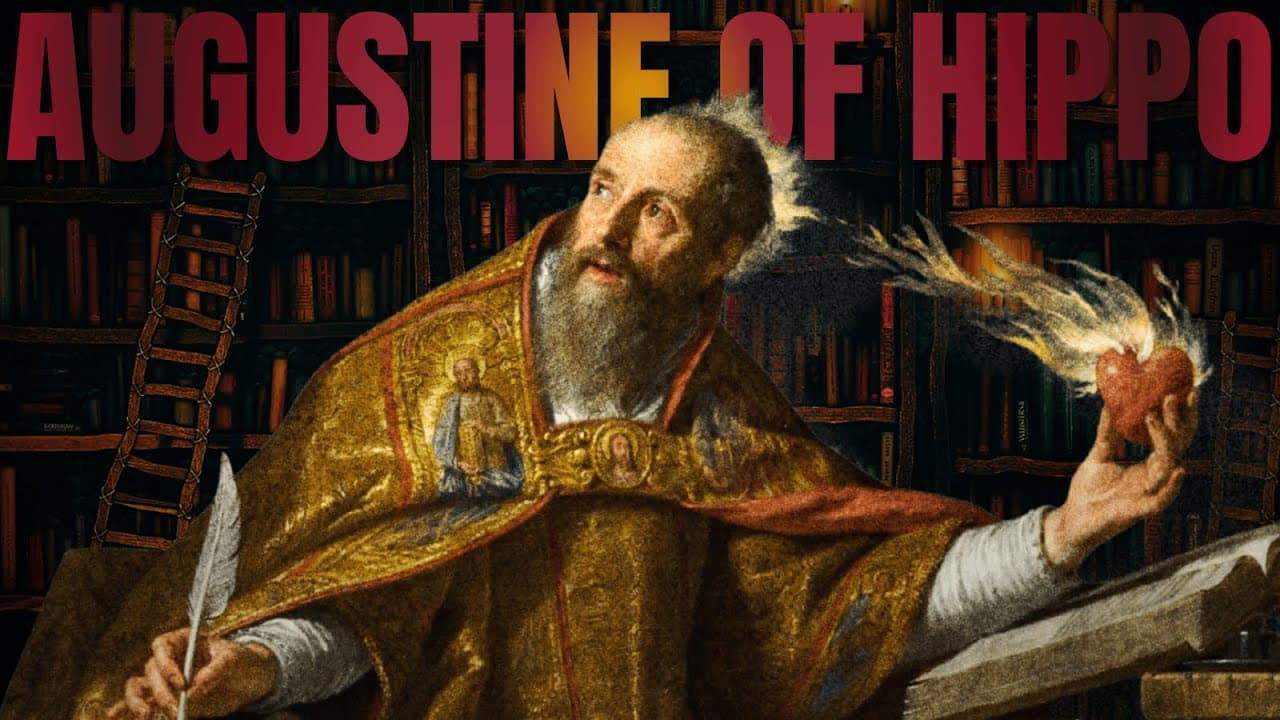
Augustine of Hippo asked why we do what we know is wrong, why nothing ever satisfies us, and where evil comes from if God is good. This episode tells the complete story of the philosopher who shaped Western thought more profoundly than almost any other figure. It follows Augustine from his African childhood to the streets of Carthage, through nine years with the Manichaeans, to the garden in Milan where everything changed. The episode explores his revolutionary ideas: evil as the absence of good, the will divided against itself, time existing only in the mind, memory as a palace larger than the world, grace that breaks chains human effort cannot loosen, and the two cities built on two loves that have been at war since the beginning of history. It also confronts the difficult dimensions of his legacy, including his teachings on predestination, original sin, and the endorsement of coercion against religious dissenters.

What Happens When a Genius Doubts Everything?
Al-Ghazali held the most prestigious teaching position in the Islamic world when, in 1095, his voice failed him and his body rejected food. Having mastered theology, law, and philosophy, he confronted a devastating question: did he actually know anything, or had he spent his life performing knowledge for the sake of fame? This three-hour exploration follows his journey from orphan in Persia to the summit of medieval Baghdad, through his systematic dismantling of the rationalist tradition in The Incoherence of the Philosophers, his complete psychological collapse, and eleven years of wandering through Damascus, Jerusalem, and Mecca as a humble seeker. His critique of causality anticipated David Hume by six centuries, and his Revival of the Religious Sciences transformed how millions practice their faith. Al-Ghazali asked whether reason alone could lead to truth, and his answer changed two civilizations.
Nietzsche: God is Dead and We Have Killed Him
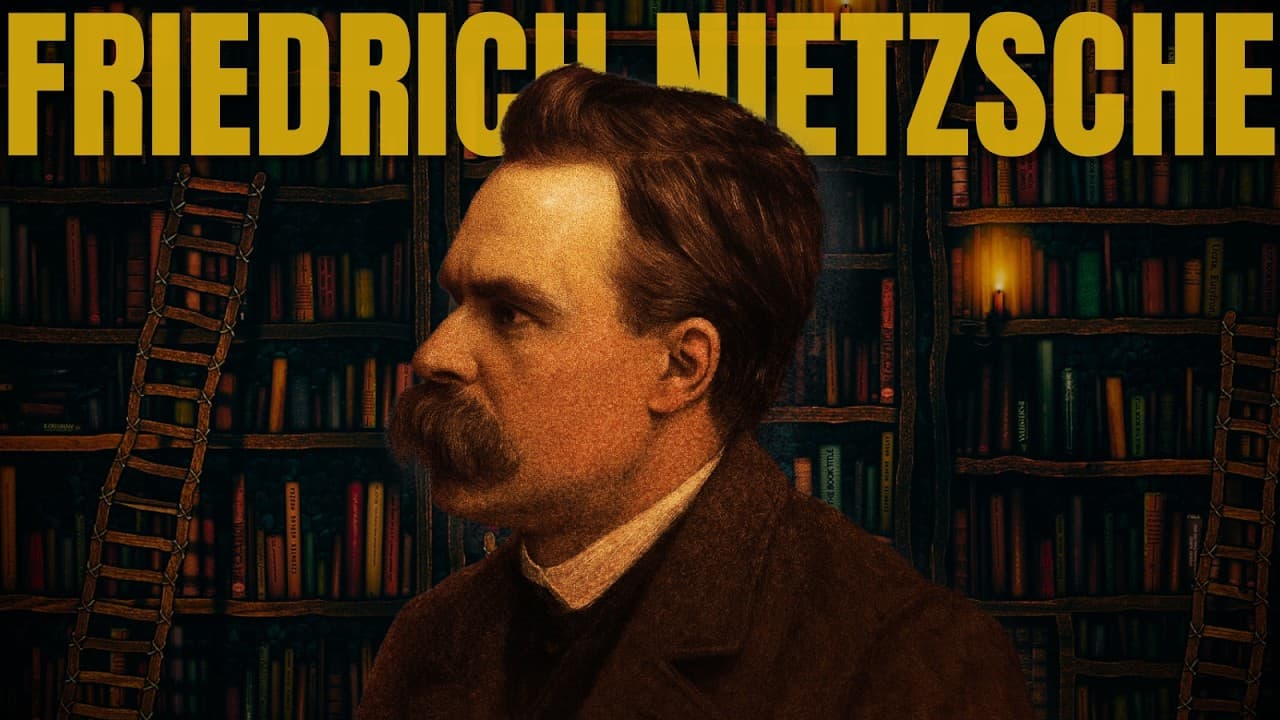
Friedrich Nietzsche diagnosed the death of God not as triumph but as catastrophe, recognizing that the foundation Western civilization had rested on for two thousand years had collapsed. This three-hour exploration traces his journey from pastor's son in Rocken to solitary philosopher, through his masterworks including The Birth of Tragedy, Thus Spoke Zarathustra, Beyond Good and Evil, and On the Genealogy of Morals. It examines his core concepts in depth: the death of God, will to power, eternal recurrence, the Ubermensch, amor fati, and the distinction between master and slave morality. The episode follows his friendship and break with Wagner, his decade of solitary wandering, his collapse in Turin, and the posthumous distortion of his work by his sister Elisabeth and the Nazi appropriation that followed. His influence on Freud, Heidegger, existentialism, Foucault, and Deleuze confirms that the questions Nietzsche raised about nihilism, values, and human flourishing remain urgently alive today.